Paper 3 Section B - Forests under threat
 Call Kai
 Learn
Learn Practice Test
 Spaced Repetition
 Match
Match Flashcards
 Knowt Play
1/38

There's no tags or description
Looks like no tags are added yet.
Name | Mastery | Learn | Test | Matching | Spaced | Call with Kai |
|---|
No analytics yet
Send a link to your students to track their progress
39 Terms
Give reasons why forest biomes are very important ecosystems on Earth
Absorb and store huge levels of carbon
Release oxygen into the atmosphere
Regulate the hydrological cycle
Interception
Less surface runoff, prevents flooding and soil erosion
Transpiration
Releases water vapour into the atmosphere
Infiltration
Plant roots increase infiltration, increases groundwater supplies and reduces surface runoff
Provide habitats
Describe the relationship between biotic and abiotic characteristics in forest biomes
The biotic and abiotic characteristics are interdependent; they interact with and influence each other
Give examples of the interdependence of abiotic and biotic characteristics of the tropical rainforest
Climate, soil, water, plants, animals and humans
Climate and plants are interdependent
Warm wet climates allow plants to grow quickly
Plants absorb sunlight for photosynthesis
As there are so many trees in the ecosystem, transpiration is high; the majority of transpired water vapour goes straight back into the clouds above the rainforest, causing rain
Plants and animals are interdependent
Plants provide food and shelter, allowing a large amount of biodiversity
Biodiverse plant and animal life means there is a large amount of organic matter releasing nutrients into soil
Humans are interdependent with plants and animals
Humans can grow food
Humans can hunt for animals
Plants have many medicinal uses
Traditional agriculture methods ensure that nutrients are not depleted from topsoil
Animals and soil are interdependent
Decomposers break down organic material releasing nutrients into the soil
etc….
Describe the different layers of the tropical rainforest
In the tropical rainforest, plants grow in distinct layers because they compete for sunlight; each layer has different conditions and types of organisms
Emergent layer
Very tall trees due to competition for sunlight
Receive the most sunlight, allowing rapid growth
Poke out of the main canopy layer
Straight trunks
Buttress roots that support their weight and prevent them from falling
Canopy
Forms a dense roof of leaves that blocks most sunlight from reaching other layers
Many epiphytes and lianas
Insects, birds, snakes, monkeys, sloths
Under canopy
Made of younger trees that have yet to reach their full height
Cooler and shady with limited sunlight, so plants grow large leaves to maximise surface area
Lianas grow from the ground and climb trees
Insects, reptiles, mammals
Forest floor/ shrub layer
Very dark
Shrubs have large, broad leaves
Insects, fungi, decomposers
Covered by shallow humus (dead decaying leaves and roots)
Describe how plants are adapted to the tropical rainforest climate
Stratified layers
Reduces competition as it creates layers with different environmental conditions, so plants in each layer are adapted differently to the conditions in their layers; this means that plants are only competing with other plants in their layer
Eg. In the shrub layer and under canopy, plants have large leaves to maximise surface area to absorb as much sunlight as possible, whereas in the emergent layer trees have large buttress roots
Large leaves in undercanopy and shrub layer
Buttress roots
Supports the weight of tall trees, keeping them stable in thin, nutrient poor soil
The shallow root system allows the plant to quickly absorb nutrients from the surface before they are washed away by heavy rain (leaching)
Drip tips
Allow water to flow off the leaf so they don’t stay too wet, preventing rotting, fungal growth and damage from weight
Epiphytes →canopy
Plants that grow on the surface of other taller plants, allowing them to escape the dark forest floor and access abundant light for photosynthesis
Lianas (woody vines) →canopy into emergent
Lianas are woody vines that climb trees to reach more sunlight without using energy to grow a large trunk
Straight trunks (emergent layer)
Growing tall and straight allows trees to reach the emergent layer more quickly to reach the most light, without wasting energy on side branches as there is limited light in the undercanopy
Describe how animals are adapted to the tropical rainforest climate
Camouflage
Help them blend into the environment to prevent being seen and eaten by predators
Poisons and venoms
Can paralyse or kill predators before they are eaten
Long limbs, strong tails, strong claws
Allows animals to climb trees and grasp branches
Large eyes
Adapted to the low light levels of the forest floor, improving vision to hunt prey or search for food
Birds have strong beaks to break open nuts
Birds have loud calls to hear each other through thick vegetation
What is the rate of nutrient cycling in the tropical rainforest like?
Very quick nutrient cycle in the tropical rainforest
This means that there are always plenty of nutrients available for plants and animals to use, supporting high levels of biodiversity
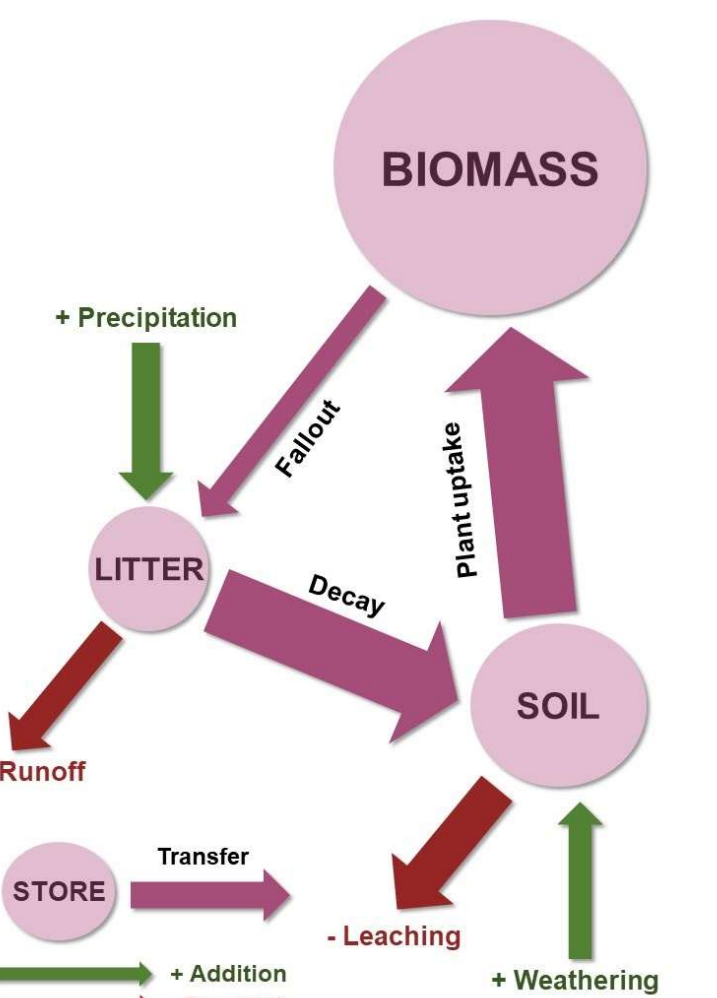
Describe the nutrient stores and transfers of the tropical rainforest (biomass, litter, soil)
Why are there high rates of nutrient cycling?
Stores:
Very large biomass store
Rapid rates of growth (rapid photosynthesis due to sunlight and precipitation)
Small litter store
Rapid decomposition (high temperatures, moist)
Small soil store
Loss of nutrients due to leaching
Increase nutrients due to precipitation and weathering
Transfers:
Large take up of nutrients
due to rapid plant growth
Large supply of nutrients
Weathering and precipitation
Large loss of nutrients
Leaching
High temperatures and moist so high rates of decomposition
High photosynthesis, so much growth and uptake
Define biodiversity
Number/ variety of different plant and animal species
Why does the tropical rainforest have high biodiversity?
Stratified layers
allows many varying conditions on each layer and therefore many different habitats; plants and animals become highly specialised to their different environments, so lots of different species develop over years
Rainforests have stable climates and don’t have seasons
so plants and animals don’t have to cope with changing conditions and there is always plenty of food, allowing many different types of organisms to survive
Rapid nutrient cycling, which speeds up plant growth and therefore food for organisms
Why does the tropical rainforest have complex food webs?
High biodiversity and many different species, allowing there to be many different links between organisms
Some animals can be both primary and secondary consumers
What is the largest biome on earth?
Taiga
Briefly describe the taiga climate
50 70 North and South, Russia and Canada
Seasonal: short, wet Summers and long, cold and dry Winters
Very short growing season
Low precipitation
Many sunlight hours in Summer, but very little in Winter
Describe how plants are adapted to the taiga forest climate
Cone shaped leaves
Allows snow to slide off, rather than collect and weigh down trees, snapping branches; branches are also flexible
Needles + waxy cuticle
Reduces the surface area of the leaf, reducing water loss
Flexible branches
Can bend if snow goes on it
Simple structure (compared to tropical rainforests)
Maximises light absorption; adaptation to poor growing conditions as a simple structure requires fewer nutrients/ less sunlight/water than a dense stratified system
Evergreen trees
Allowing them to maximise photosynthesis when there is available light
Describe how animals are adapted to the taiga forest climate
Migratory
Enables them to escape extremely cold winters and scarcity of food
Thick, oily fur
Insulates them, preventing them from losing body heat in the cold
Hibernate
Allows them to conserve energy when food is scarce
Camouflage
Hide from predators and prey
Oversized feet (compared to body size)
Exceptionally large feet compared to body size, preventing them from sinking into soft snow, allowing them to escape predators and to chase prey
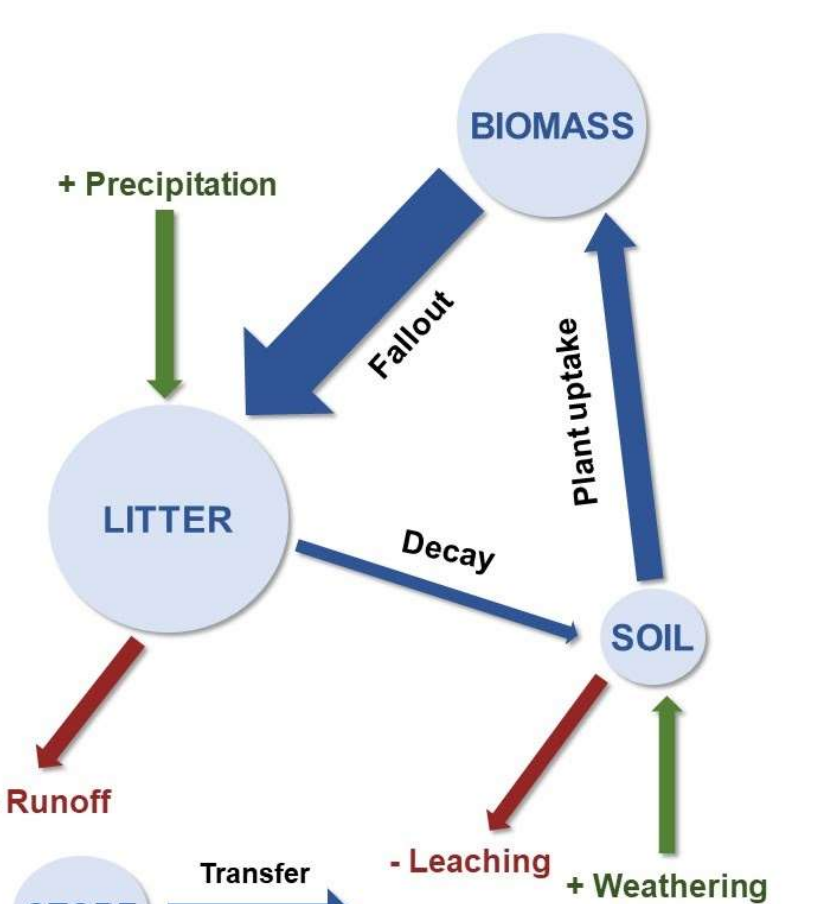
Describe the nutrient stores and transfers of the tropical rainforest (biomass, litter, soil)
Why are there high rates of nutrient cycling?
Smaller stores and smaller flows of transfer due to slow rates of growth and decomposition (cold, low precipitation)
Small biomass store
Plants can only grow for a few months of the year
Largest store is litter store
Very slow rates of decomposition
Small soil store
Low precipitation,
Slower weathering
Plant nutrient uptake is very low
Low biodiversity, slow growth (low photosynthesis)
Low nutrient supply
Low precipitation so fewer nutrients are added through dissolved rainwater or through weathering
Some nutrient loss
Through leaching after snowmelt in Summer
Slow rates of decomposition due to cold, dry climate
Slow rates of growth due to short growing season — mainly cold, low precipitation and limited sunlight
What is meant by the productivity of a forest?
The rate at which plants generate new biomass through photosynthesis
Why does the taiga forest have much lower levels of biodiversity compared to the tropical rainforest?
Land was much colder and covered by ice until around 15,000 years ago, so species have had relatively little time to adapt to the current climate
As it emerged from last major ice age
Taiga forests have a simpler structure, so there aren’t many different habitats so there are fewer ecological niches
Taiga forests are much less productive and nutrients take a much longer time to return to soil; growing season is also very short - this means that there’s not much food available, so there is a constant struggle for survival
Name a direct and indirect threat to the tropical rainforest
Direct: deforestation
Indirect: climate change
Give some indirect threats to the tropical rainforest
Main threat: climate change
Pollution
Water pollution: toxic chemicals poison organisms, pesticides and insecticides kill pollinators
Air pollution: acidic gases cause acid rain, impacts soil pH and tree roots
Invasive species
From the global spread of goods and products around the world; creates competition and disrupts ecology
Define ecosystem stress
Ecosystem stress is when an ecosystem is put under pressure
by changes or disturbances
that disrupt its normal functioning, balance and stability
Describe the causes of deforestation in the tropical rainforest (7)
Agriculture:
Commercial agriculture
Cleared for cattle grazing
Cleared for plantations (palm oil, soya)
Subsistence agriculture — poverty
Farmers grow food for themselves and their family
Forestry:
Commercial hardwood logging
Trees are felled to make furniture, for construction
Local demand for fuelwood — poverty
Burnt and used as a fuel for cooking
Energy and infrastructure:
Demand for biofuels
Large amounts of land is cleared to grow crops for biofuels (as conditions are good for photosynthesis)
Hydroelectric power
Rainforests have large rivers, so rivers are flooded and dams are built to generate electricity
Destroys habitats and displaces communities
Roads
Demand for mineral resources:
Minerals in rainforest are extracted by mining and drilling
Roads must be built to transport these
What are the underlying root causes of deforestation in the rainforest? (4)
Poverty
Local people cannot afford food, so clear the forest for subsistence farming
Cannot afford fuel, so cut down trees for fuelwood for cooking
Debts
Exploit the forest by selling cash crops and exporting timber to pay off debts
Development
Demand for energy: HEP, biofuel, coal
Increasing affluence globally, increased demand for products that require raw materials
Minerals
Timber
Describe the environmental impacts of deforestation (4)
Soil erosion and landslides
No tree roots to give structure and hold it together
Soil becomes less nutrient dense
Leaching increases due to no interception
Global warming
Less CO2 absorbed
Burning releases CO2
Reduction in biodiversity
Cannot live in or adapt fast enough to new conditions
Explain why climate change is an indirect threat to the health of tropical rainforests (6)
Causes drought
Drought kills decomposers
Alters the nutrient cycle
Drought leads to forest fires
Destroys vegetation
Drought leads to ecosystem stress
Extinction as cannot survive
Aquatic habitats like streams and rivers dry up
meaning that aquatic organisms die
Lack of water can cause the leaves and fruits of tree to die and fall off
reducing food supply in the canopy and affecting food webs
Drying litter reduces decomposition
Fewer nutrients released back into the soil, plants grow less
Describe the direct threats to the taiga forest (causes of deforestation) (5)
Direct (damages forest straight away at the source):
Taiga is made up of softwood
Logging for softwood
Used in construction and for furniture
Pulp and paper production
Paper comes from the softwoods (coniferous) trees in the taiga; the trees are felled and mashed into a pulp to be used to make paper
Exploitation of minerals
The taiga forest is rich in minerals; trees are felled to make space for mines and for roads
Extraction of oil and gas (and tar sands)
Open pit mining requires deforestation
Land deforested for roads and pipelines
Flooding of rivers and building of dams for HEP
Destroys habitats
Describe the indirect threats to the taiga forest (4)
Indirect (harms the forest through another process):
Climate change
Softwoods are flammable, vulnerable to wildfires
Wildfires also increase the dominance of fire-tolerant species, reducing biodiversity
Animals and plants will die out, loss of biodiversity
Proliferation of pests and pathogens effect species
Exploitation of minerals
Harmful chemicals from mining are washed into the river ecosystems, disrupting the wildlife
Exploitation of fossil fuels
Tar sands - open pit mining
Extraction of oil in tar sands produces toxic waste and uses huge amounts of water
Hydroelectric power to generate electricity
Disrupts fish migration patterns, preventing fish from reaching breeding grounds, which can reduce the fish populations
Altered water levels affect soil moisture, which affects which plants can grow
What natural threats contribute to a loss of biodiversity in the taiga forest (3)
Acid precipitation from sulfur dioxide from burning fossil fuels
Can make soils too acidic to support growth
Can kill aquatic organisms in lakes and streams if it lowers the pH of natural water sources
Damages plants’ leaves and weakens the trees, reducing photosynthesis
Increasing frequency of forest fires (hot, dry summers increase susceptibility)
The taiga forest is naturally adapted to wildfires as they allow new growth and regenerate the forest; however climate change is increasing the frequency of the fires
No time for regeneration, so less tolerant species go extinct, affecting animals that eat them
Fire tolerant vegetation becomes dominant, loss of biodiversity
Proliferation of pests + diseases
Reduce biodiversity by killing large numbers of trees
Taiga’s low biodiversity mean that trees of same species live very close together, so a disease can destroy a large area rapidly
Warming caused by climate change is making it easier for pests and pathogens to survive
Name the global actions designed to protect tropical rainforest species and areas
CITES
REDD
Describe CITES and give its advantages and disadvantages
Tropical rainforest global action:
CITES (convention on international trade in endangered species of wild fauna and flora)
Agreement to tightly control trade in wild animals and plants
Advantages:
Many countries are apart of the agreement (180+)
Tackles issue at global level, controlled worldwide
Encourages sharing of information about wildlife trade
which raises awareness of threats to biodiversity
Protects endangered species by controlling or banning international trade
preventing extinction and protecting biodiversity
Reduced ivory (elephant horn) trade
Disadvantages:
Protecting species does not prevent global warming and deforestation
they could still go extinct if habitats are destroyed
Not all countries are members
so does not control all international trade
Each country is in control of their own management and laws
so they could break their own rules without consequence
Low income countries may not have the finances to implement management strategies
Species must be actively under threat to be protected
Describe REDD and give its advantages and disadvantages
Tropical rainforest global action:
REDD (reduced emissions from deforestation and forest degradation)
Scheme that offers financial incentives to forest owners in poorer countries for not deforesting
Advantages:
Cheap approach of reducing emissions as no implementation or development of new technologies
Deals with the cause of climate change as well as direct impacts of deforestation
The forest is protected, so it remains a habitat for species - biodiversity is not lost
Countries are more likely to conserve their forests for financial rewards, as opposed to doing it for just the environmental benefits
Financially supports local communities and governments that are dependent on forest resources for survival and financially
Disadvantages:
Very difficult to police, so illegal deforestation may continue in other areas
Preventing forest activities (eg. mining, agriculture) may affect local communities who depend on the income from them - money goes to government
Aspects of REDD are not clear, meaning that it may be possible to cut down rainforests but still receive rewards if they are replaced with other types of forest (eg. replaced with palm oil plantations which are lower in biodiversity)
Explain why rates of deforestation vary globally in the tropical rainforest: (4)
Increasing rates
Increasing rates:
Poverty
Increases the number of small-scale subsistence farming (as market prices are expensive) and use of fuel wood (other fuels are expensive)
Foreign debt
Huge market for goods from tropical rainforests, so it is easy for poor countries to make money to pay back debt they owe — cash crops
Economic development
Low income countries do not have the money to invest in forest conservation and management
Newly industrialised countries have high demand for resources from tropical forests (eg. timber for manufacturing, energy resources)
Conflict and war
Funding and efforts will be focused on other needs
Explain why rates of deforestation vary globally in the tropical rainforest: (4)
Decreasing rates
Decreasing rates:
Government policies and laws
Fines and prosecution for illegal deforestation
International condemnation
Puts pressure on companies involved in deforestation, shaming them and discouraging consumers from buying products
National parks + conservation areas
Use of national park status enforces protection and conservation
Education and public awareness
Encourages donations, support and public pressure for forest protection
Describe methods of sustainable tropical rainforest management (4)
Sustainable forestry involves considering the environmental, social and economic aspects of forest management — alternative livelihoods
Ecotourism
Small-scale tourism that protects the environment and benefits local people
Provides jobs without cutting trees
Raises awareness and educates tourists of rainforest value
Profits can fund conservation projects
Sustainable farming:
Agroforestry:
Trees and crops are planted at the same time next to each other, mimicking the natural forest structure
Maintains biodiversity
Trees protect soil from erosion, keeping the land productive and thus reducing the need to repeatedly clear new forest land
Less trees cut down
Crop rotation
Growing different crops on the same area of land over a planned sequence over several years
Maintains soil nutrients because different plants use different nutrients, reducing the need to deforest new, fertile land
Afforestation
Trees are replanted after they are cut down
Name the methods of conserving taiga forests
Creating national parks
Creating wilderness areas
Sustainable forestry
Describe the advantages of creating national parks in the taiga forest and its challenges
National parks: an area that is mostly in its natural state that is managed to protect biodiversity and promote recreation
Advantages:
Allows tourists and recreational users to access, bringing income
Prevents unsustainable human activity (destruction of habitats)
Protects species and habitats
Raises awareness and educates people on the importance of protecting the forest
Disadvantages:
May not take into account the needs of indigenous communities who may use the land for hunting
Access roads, infrastructure and pollution from tourists may harm the ecosystem
Money and resources are needed to build
Describe the advantages of creating wilderness areas in the taiga forest and its challenges
Wilderness area: an area that is undisturbed by human activity, managed with the aim of protecting the landscape
Advantages:
Highest level of protection as most human activity is banned
Usually covers a very large area so large scale processes (eg. migrations) can still occur
Help to prevent climate change; stabilise local climates and store carbon
Disadvantages:
Large, remote areas are hard to police
Can cause a loss in gdp if mining and logging cannot occur
Economic pressure from companies and tourists who want to build roads or use resources
Describe the sustainable forestry in the taiga forest and its challenges (2)
Sustainable forestry: ways of harvesting the timber from the forest without damaging it in the long term
Limit number of trees that can be cut down (selective logging — only large valuable)
Reduces deforestation and habitat destruction
Companies may be required to regenerate the area and replant trees after logging
Allows economic benefits while still conserving the environment
Disadvantages:
Some countries may struggle to enforce restrictions
Restrictions may be unclear, allowing people to bypass the rules and continue to exploit the forest
Different groups may disagree with the rules and restrictions, causing conflict
Money and resources are needed to regenerate and replant, reducing profits
Roads are often built to transport
Fragment habitats
Pollution from vehicles
Animals can be harmed during deforestation and disturbed by the noise
Give reasons for protecting or exploiting forest and natural resources in the taiga (5p, 3e)
Protection:
Scientists: Prevents global warming
Reducing carbon stores
Environmentalists: Prevent extinction of species — ecology disruption and loss of biodiversity
Uniquely adapted, so will be unable to live elsewhere
Indigenous peoples: Many indigenous people depend on the forest for services and goods so that they can live their traditional way of life
Local residents: Taiga is culturally important to them and want to conserve heritage
Economists: Tourists may want to visit the forest and enjoy the natural environment
Brings income
Exploitation:
Residents: Forest industries provide lots of jobs and employment
Businesses: Exploitation of the forest generates lots of wealth for oil companies and logging companies
Governments sell exploited resources, generating income