OCR A A LEVEL BIOLOGY - BIOLOGICAL MOLECULES
 Call Kai
 Learn
Learn Practice Test
 Spaced Repetition
 Match
Match Flashcards
 Knowt Play
1/126

There's no tags or description
Looks like no tags are added yet.
Name | Mastery | Learn | Test | Matching | Spaced | Call with Kai |
|---|
No analytics yet
Send a link to your students to track their progress
127 Terms
what are hydrogen bonds
weak forces of attraction between molecules with different electronegativity values (between polar molecules)
what is the structure of water
Covalently bonded oxygen and two hydrogen atoms:
- the oxygen is delta negative
- the hydrogen is delta positive
- a polar molecule
why is ice less dense than water
when water freezes, the water molecules are held in a rigid lattice which holds the molecules further apart
why does water have a relatively high boiling point
hydrogen bonds between water molecules require extra energy to be broken
why is thermal stability in water important
water has a high specific heat capacity meaning a body of water maintains a fairly constant temperature
why is freezing in water important
ice is less dense than water so it floats which insulates the water and prevents it freezing completely this enables living organisms to survive below the ice
why is evaporation in water important
a lot of energy is needed to cause evaporation, which is used to cool the surface of living things
why is water being liquid important
it can flow and transport materials in living things
why is cohesion in water important
the attraction of water molecules produces surface tension, which creates a habitat on the surface
it also enables continuous columns of water to be pulled up the xylem
why is water being incompressible important
it can be pressurised and pumped in transport systems or used for support in hydrostatic skeletons
why is water being able to act as a reactant important
water molecules are used in a wide range of reactions such as hydrolysis and photosynthesis
why is water being able to act as a solvent important
as the molecules are polar, water can dissolve a wide range of substances by completely surrounding the ions
what is a polymer
a polymer is a long chain that comprises of similar, smaller molecules known as monomers
what is the monomer of polysaccharides
monosaccharides
what is the monomer of proteins
amino acids
what is the monomer of DNA and RNA
nucleotides
what is a hydrolysis reaction
a reaction involving the breaking of a bond in a molecule using up a water molecule
what is a condensation reaction
a reaction in which two molecules combine to form a larger molecule, and a water molecule is released
what elements are present in carbohydrates
C,H,O
what elements are present in lipids
C,H,O
what elements are present in proteins
C,H,O,N,S
what elements are present in nucleic acids
C,H,O,N,P
what is the general function of carbohydrates
they act as a source of energy, as a store of energy, and as structural units
what are the three main groups of carbohydrates
monosaccharides, disaccharides, polysaccharides
what are the properties of monosaccharides
soluble in water, insoluble in non-polar solvents and is a sweet reducing sugar
what are the two main groups of monosaccharides
pentose sugars, hexose sugars
what is the structure of alpha glucose
the OH group is below the carbon plane
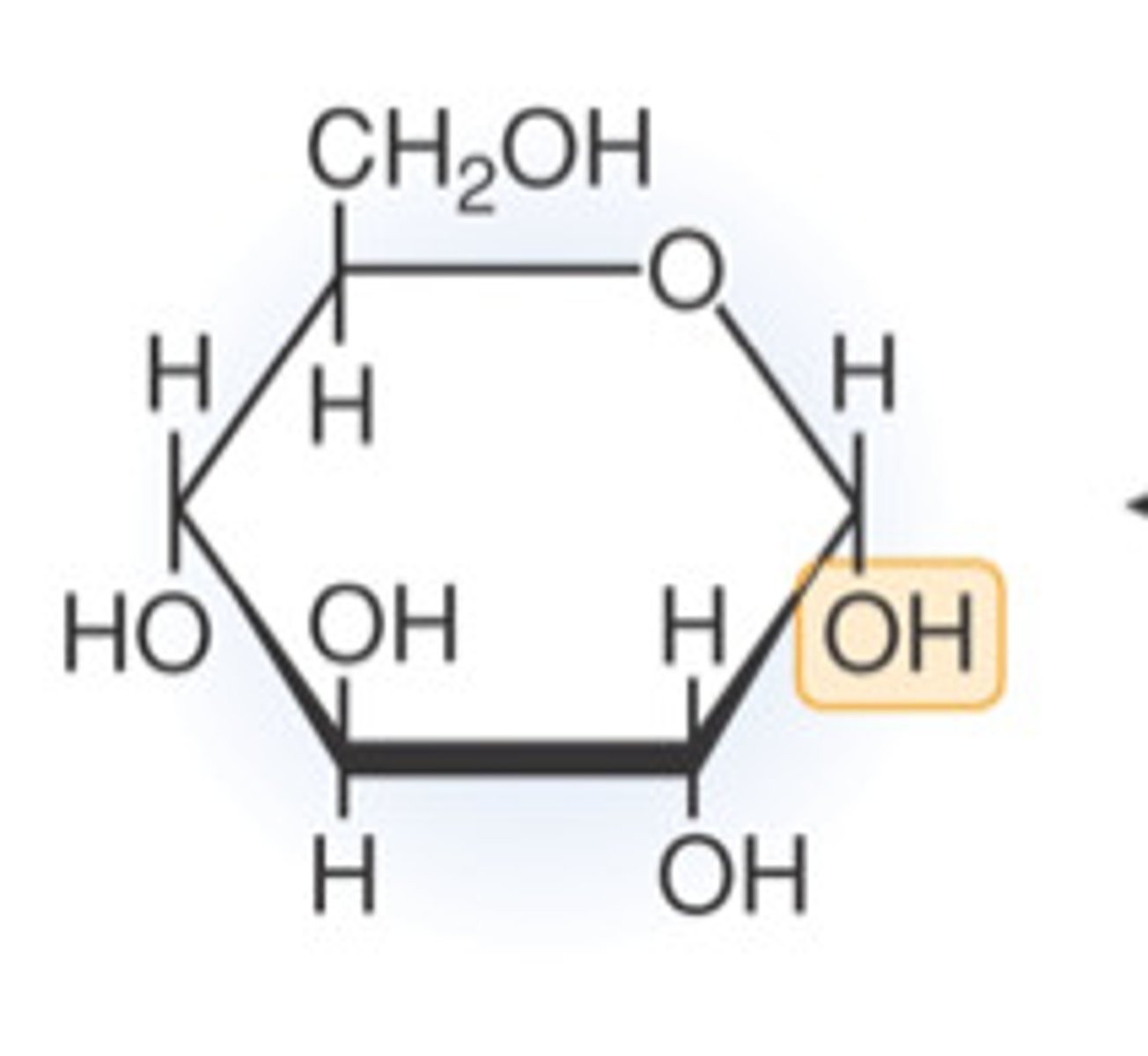
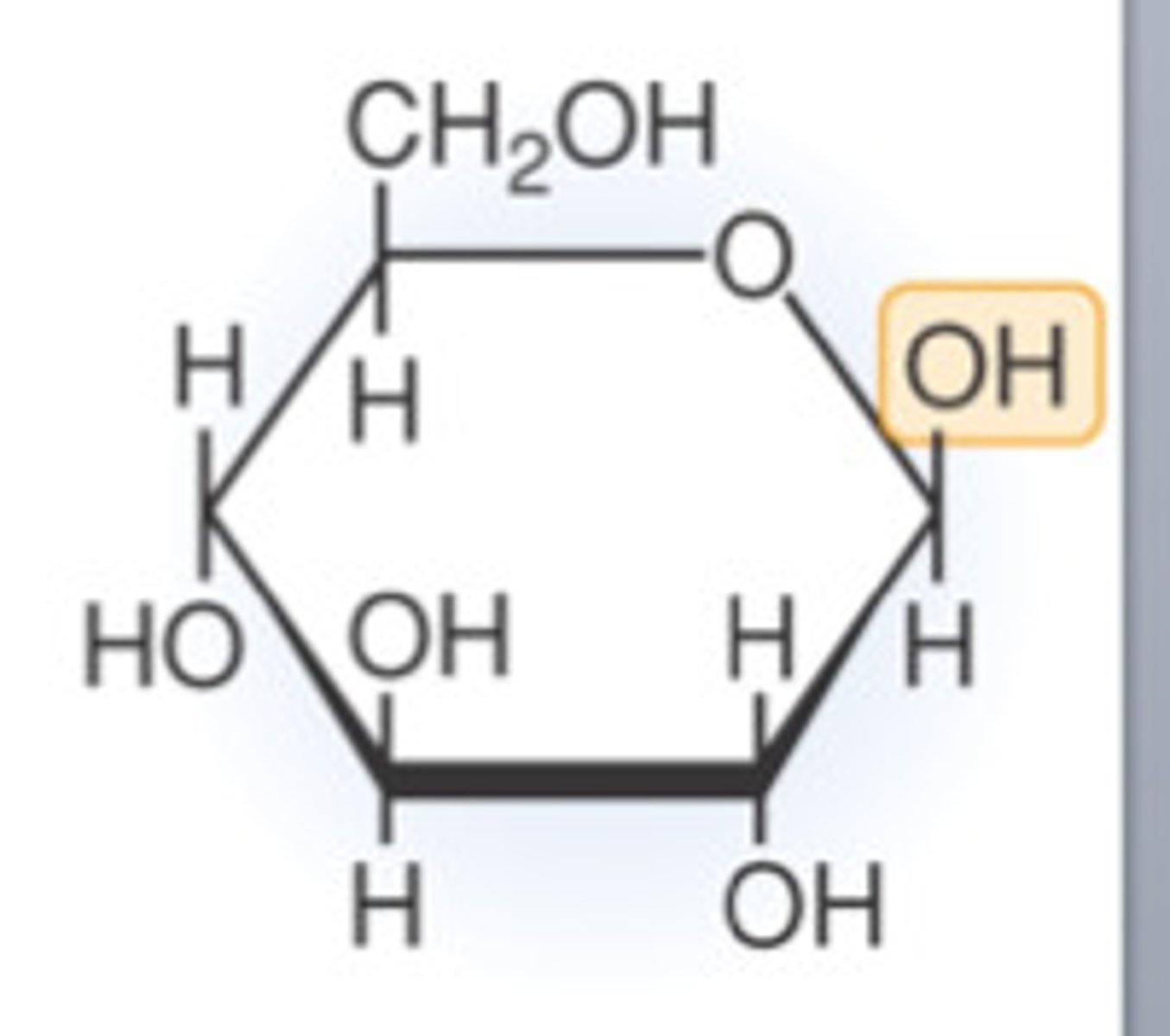
what is the difference between alpha and beta glucose
the OH group on carbon one is flipped
what is the structure of beta glucose
the OH group is above the carbon plane
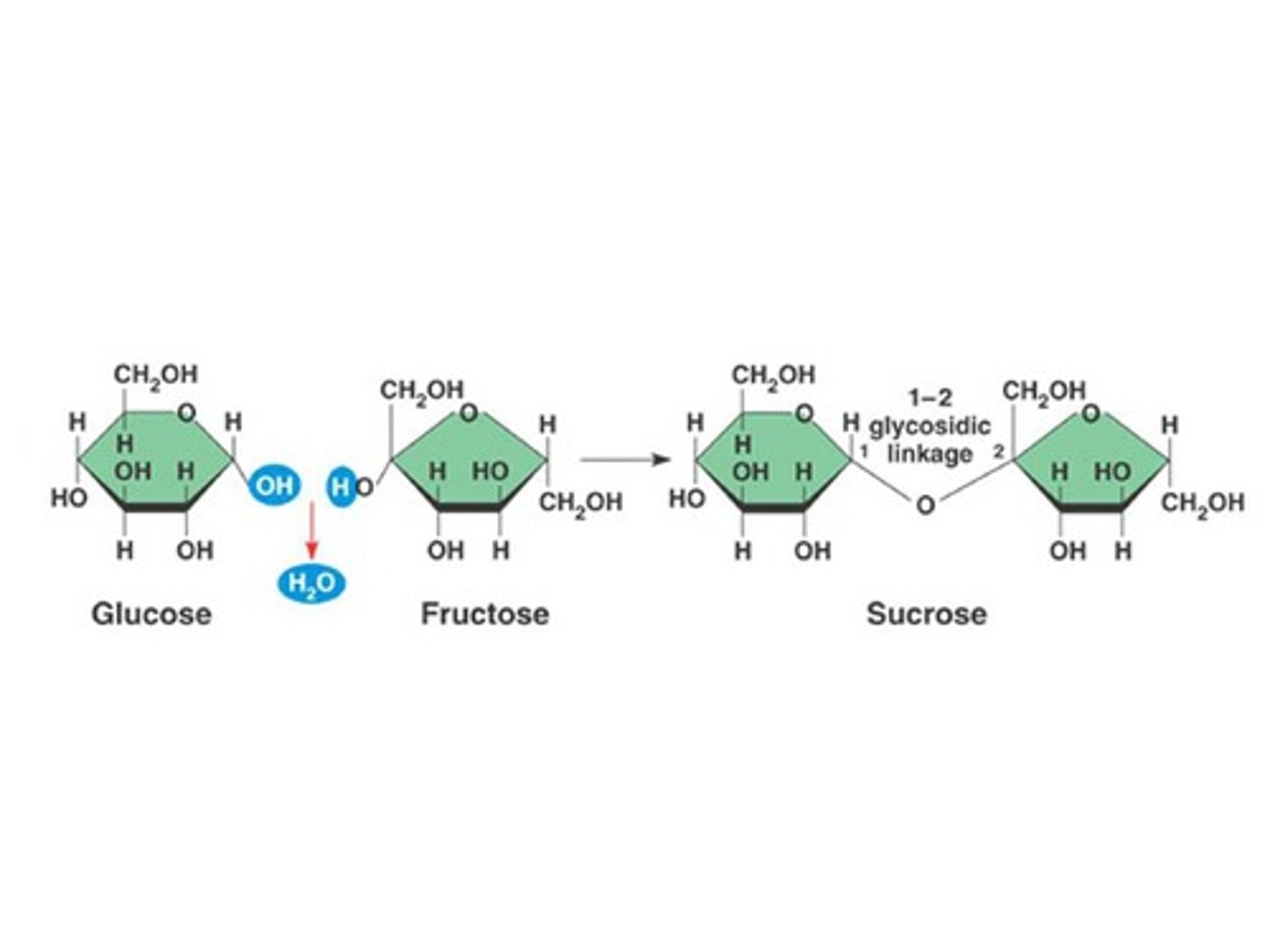
what bond joins two monosaccharides
glycosidic
when two monosaccharides join, what is made
a disaccharide
in what reaction do two monosaccharides join
condensation
what are the properties of disaccharides
they are soluble in water and are sweet; most are sweet reducing sugars with the exception of sucrose
how do two monosaccharides join
a hydrogen from one molecule's hydroxyl group joins to a hydroxide from another molecule's hydroxyl group and is released as water, then the remaining oxygen joins to the other molecule
which two monosaccharides join to form maltose
alpha glucose + alpha glucose
which two monosaccharides join to form sucrose
alpha glucose + fructose
which two monosaccharides join to form lactose
alpha glucose + galactose
what are the properties of polysaccharides
polysaccharides are very large, insoluble molecules
what is starch made from
amylose and amylopectin
what is the subunit in amylose
alpha glucose
what is the structure of amylose
amylose consists of a long, unbranched chain of α glucose subunits
the subunits are joined by a 1,4 glycosidic bond
what are the properties of amylose
since the hydroxyl group on carbon 2 of each subunit is hidden inside the coil, amylose is insoluble
its very compact
what are the uses of amylose
used for the storage of glucose subunits and energy in plant cells
what is the subunit in amylopectin
alpha glucose
what is structure of amylopectin
amylopectin is a long, branched chain of α glucose subunits
the subunits are joined by both 1,4 and 1,6 glycosidic bonds masking the molecule branched
what are the properties of amylopectin
its very compact
its glucose subunits are easily accessible
what are the uses of amylopectin
energy store in plants
what is the subunit in glycogen
alpha glucose
what is the structure of glycogen
glycogen is a long, branched chain of α glucose subunits
the subunits are joined by both 1,4 and 1,6 glycosidic bonds masking the molecule branched
what are the properties of glycogen
lots of branches (because more 1,6 bonds occur) meaning its glucose subunits are easily accessible, and can be removed in large quantities
insoluble
what are the uses of glycogen
an energy store in animals
what is the subunit in cellulose
beta glucose
what is the structure of cellulose
cellulose consists of a long, straight chain of β glucose subunits
the subunits are joined by a 1,4 glycosidic bond
what are the properties of cellulose
the hydroxyl group on carbon 2 is exposed, allowing hydrogen bonds to form
every second cellulose molecule is rotated 180 degrees to help form the glycosidic bond; this prevents the molecule from twisting
cellulose is strong and insoluble
what are the uses of cellulose
lots of cellulose molecules join together to form a microfibril; lots of microfibrils make up a macrofibril
plant cell wall
what are lipids
they are a large group of compounds like triglycerides, phospholipids and steroids
what is the structure of triglycerides
a triglyceride is a macromolecule containing one glycerol molecule and three fatty acid chains
what bonds are present in triglycerides, and in what reaction are these formed
ester bonds between the glycerol and the fatty acids are formed in condensation reactions
what are the properties of triglycerides
triglyceride molecules are rich in energy
what are the uses of triglycerides
storing excess energy, providing buoyancy and insulation (thermal and electrical)
what are fatty acids
long chains of carbon atoms with hydrogen atoms bonded to them
what is a saturated fatty acid
a saturated fatty acid is a fatty acid with no double bonds
what is an unsaturated fatty acid
an unsaturated fatty acid is a fatty acid with a double bond
what are the properties of saturated fatty acids
they have a high melting point so are most likely to be solid at room temperature
what are the properties of unsaturated fatty acids
they have quite a low melting point so are most likely to be liquid at room temperature
what is the structure of phospholipids
phospholipids are similar to triglycerides, but one of the fatty acid chains is replaced by a phosphate group
which end of a phospholipid is hydrophobic
fatty acid tails
which end of a phospholipid is hydrophilic
phosphate head
how do phospholipid bilayers form
phospholipids form bilayers, with the hydrophobic 'tails' in the centre and the hydrophilic 'heads' pointing outwards; this is the basis of all cell membranes
what is cholesterol
a steroid alcohol
what is the structure of cholesterol
it consists of four carbon-based rings
what is the function of cholesterol
it regulates the fluidity of the membrane, preventing it from becoming too fluid or too stiff
used to make the hormones oestrogen and testosterone, bile and vitamin D
what are proteins
long chains of amino acids folded into a specific 3D shape
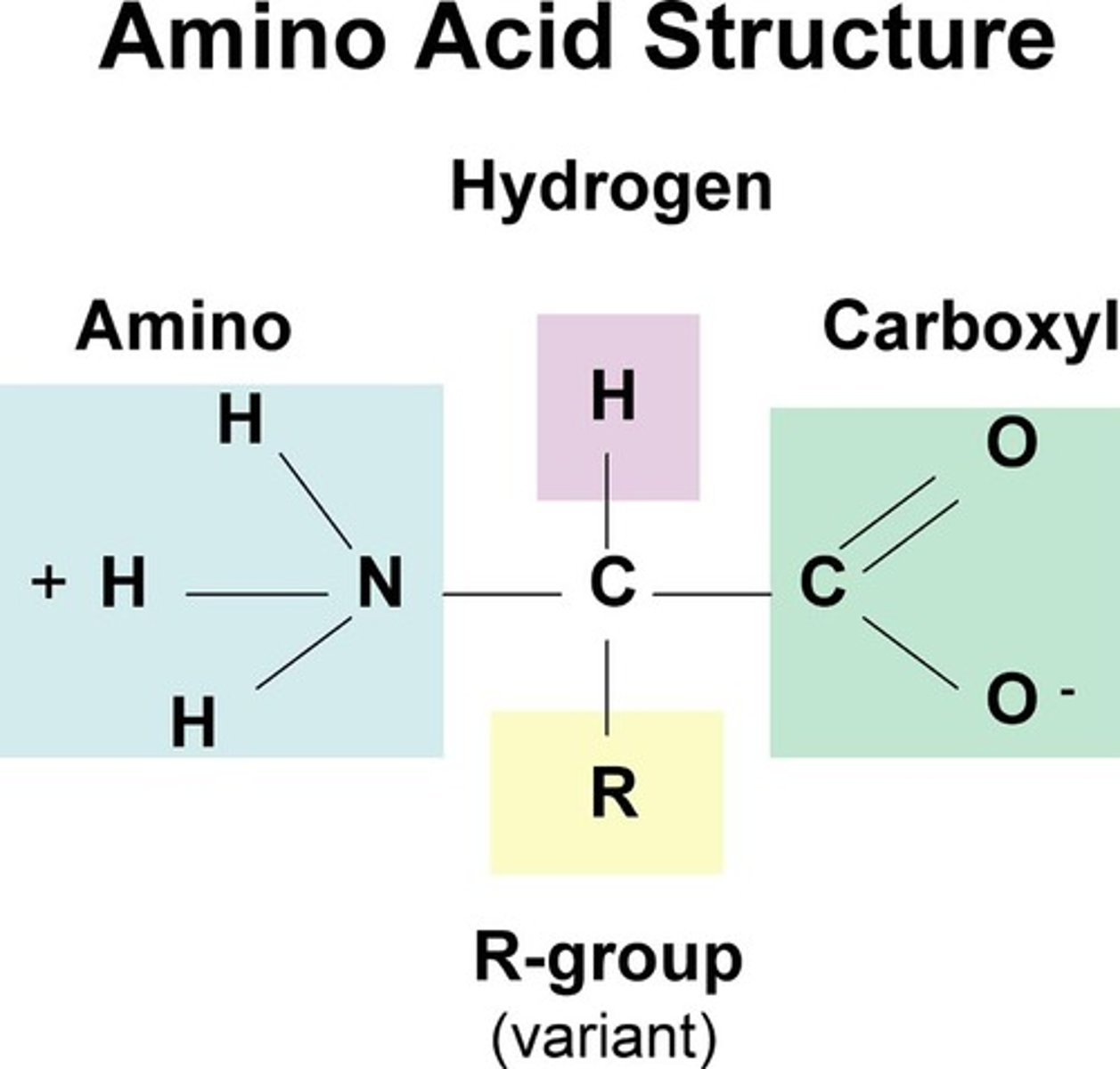
what is the general structure of an amino acid
they have an amine group (NH2), a carboxyl group (COOH), a central carbon with a hydrogen attached, and a variable (R) group
what bonds form between two amino acids, and which reaction forms these bonds
peptide bonds are formed in condensation reactions
what is the primary structure of proteins
the sequence of amino acids joined by peptide bonds
what is the secondary structure of proteins
secondary structure is how the primary structure folds and coils, forming either an alpha (α) helix or a beta (β) pleated sheet. Hydrogen bonding is present.
what is the tertiary structure of proteins
tertiary structure is formed when the secondary structure is folded or coiled again to produce a 3D structure
what is the quaternary structure of proteins
when a protein is made up of more than one tertiary structure
what bonds are present in the tertiary structure of proteins
hydrogen, ionic, disulphide, hydrophobic and hydrophilic interactions
how do two amino acids join
the peptide bonds form between the amine group of one amino acid and the carboxylic acid group of another
what are the properties of globular proteins
these proteins are more water soluble and are active in metabolism; their activity relies on their 3D shape
what are the three examples of globular proteins
haemoglobin, amylase, insulin
what is the function of haemoglobin
transporting oxygen around the body
how many polypeptide chains make up haemoglobin
four:
two alpha chains
two beta chains
why is haemoglobin described as conjugated
it is conjugated as each subunit has a prothetic group, a haem group, attached containing a single iron ion (Fe2+)
what is the function of amylase
amylase is an example of an enzyme; it hydrolyses the bonds between glucose subunits in amylose
how is amylase adapted to its function
its compact globular shape contains an active site that's shape is complementary to the shape of the substrate
the active site contains at least one calcium ion that acts as a cofactor and is essential for the correct action of the enzyme
what is amylase
an enzyme
what is insulin
a hormone
what is the function of insulin
is used to stimulate the removal of excess glucose from the blood
how is insulin adapted to its function
the molecule has a specific 3D shape that is complementary to the to the shape of glycoprotein receptors in the liver
what are the three examples of fibrous proteins
collagen, keratin and elastin
what are the properties of fibrous proteins
they tend to have a regular sequence of amino acids, aren't soluble in water and form fibres that have structural functions
how many polypeptide chains does collagen have
three
what are the properties of collagen
strong, not easily stretched
what are the functions of collagen
provides strength in the arterial walls, in tendons and in bone
what are the properties of keratin
protects delicate parts of the body
how many polypeptide chains does elastin have
two
what are the functions of keratin
strong, impermeable to water