Baylor University Biology 1306 Final Exam Review
 Call Kai
 Learn
Learn Practice Test
 Spaced Repetition
 Match
Match Flashcards
 Knowt Play
1/100

There's no tags or description
Looks like no tags are added yet.
Name | Mastery | Learn | Test | Matching | Spaced | Call with Kai |
|---|
No analytics yet
Send a link to your students to track their progress
101 Terms
key features of natural selection
- Individuals do not evolve, populations do
- Natural selection can only increase or decrease heritable traits that vary in population
homology
similarity resulting from common ancestry
homologous structures
anatomical resemblances that represent variations on a structural theme present in a common ancestor
vestigial structures
remnants of features that served important functions in the organism's ancestors
converget evolution
evolution of analogous features in distantly related groups
analogous traits
- arises when groups independently adapt to similar environments in similar ways
- does not provide information about ancestry
genetic variation
differences among individuals in the composition of their genes or other DNA segments
population
a grouping of one species in a defined area
species
individuals within a population that breed and produce offspring capable of breeding as well
alleles
different forms of the same gene
gene pool
all the genes and alleles in a population
microevolution
refers to changes in genes and allele frequencies in a population
macroevolution
the broad pattern of evolution above the species level
factors of microevolution
natural selection, genetic drift, mutations, gene flow
adaptive evolution
natural selection is aka
genetic drift
measure of changes in the gene pool in small populations
types of genetic drift
bottleneck and founder effect
gene flow
- movement of alleles from one population to another
- holds a species together genetically
mutations
permanent change in DNA
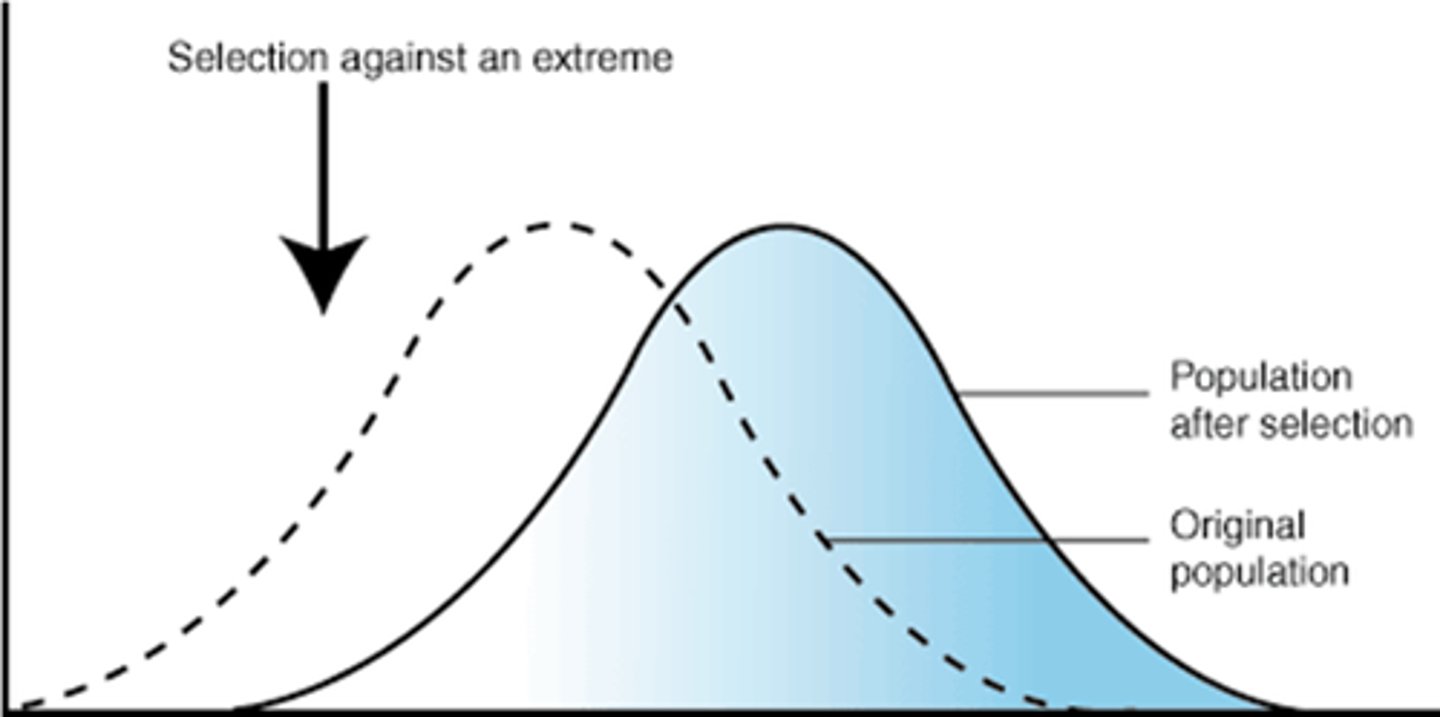
directional selection
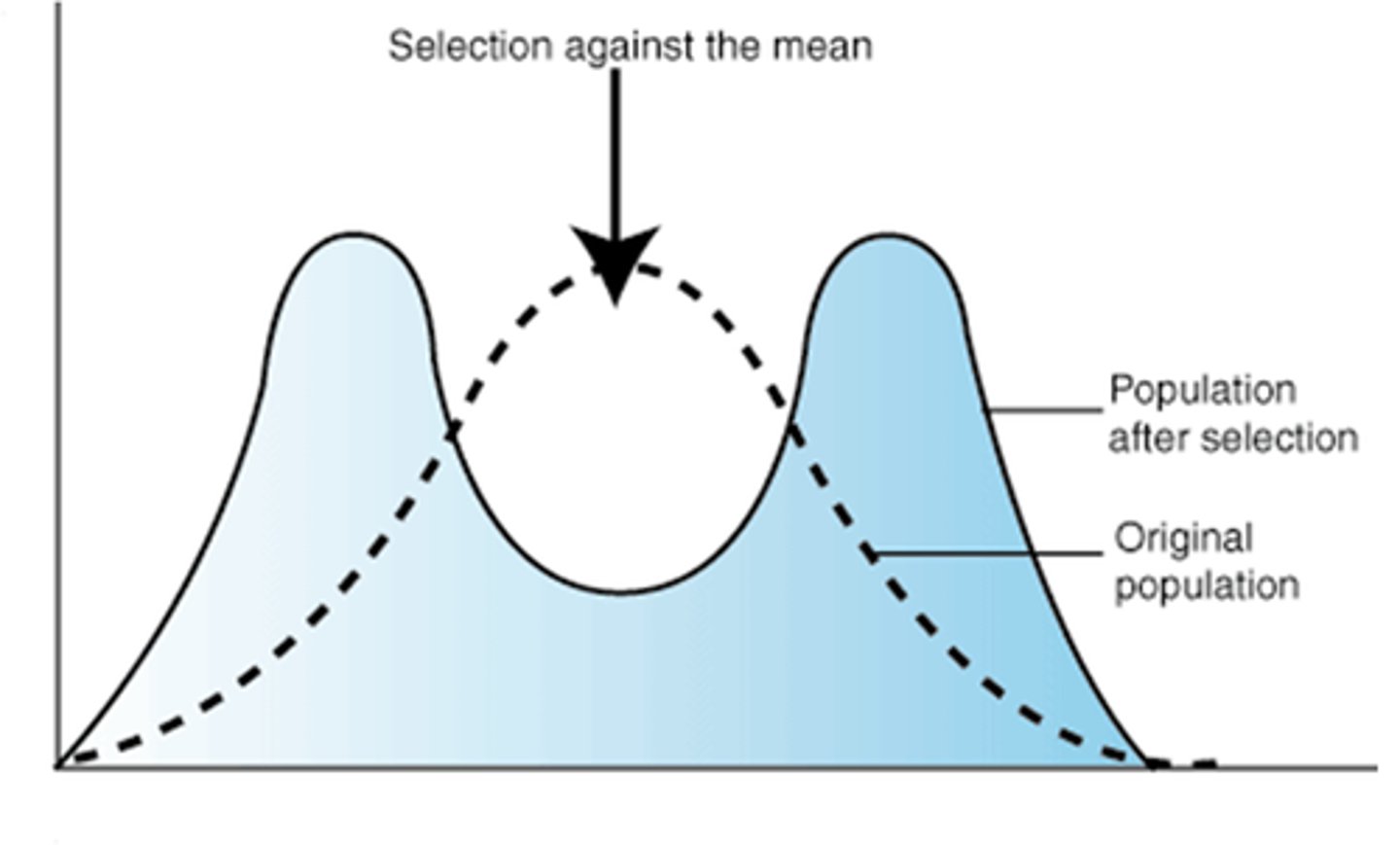
disruptive selection
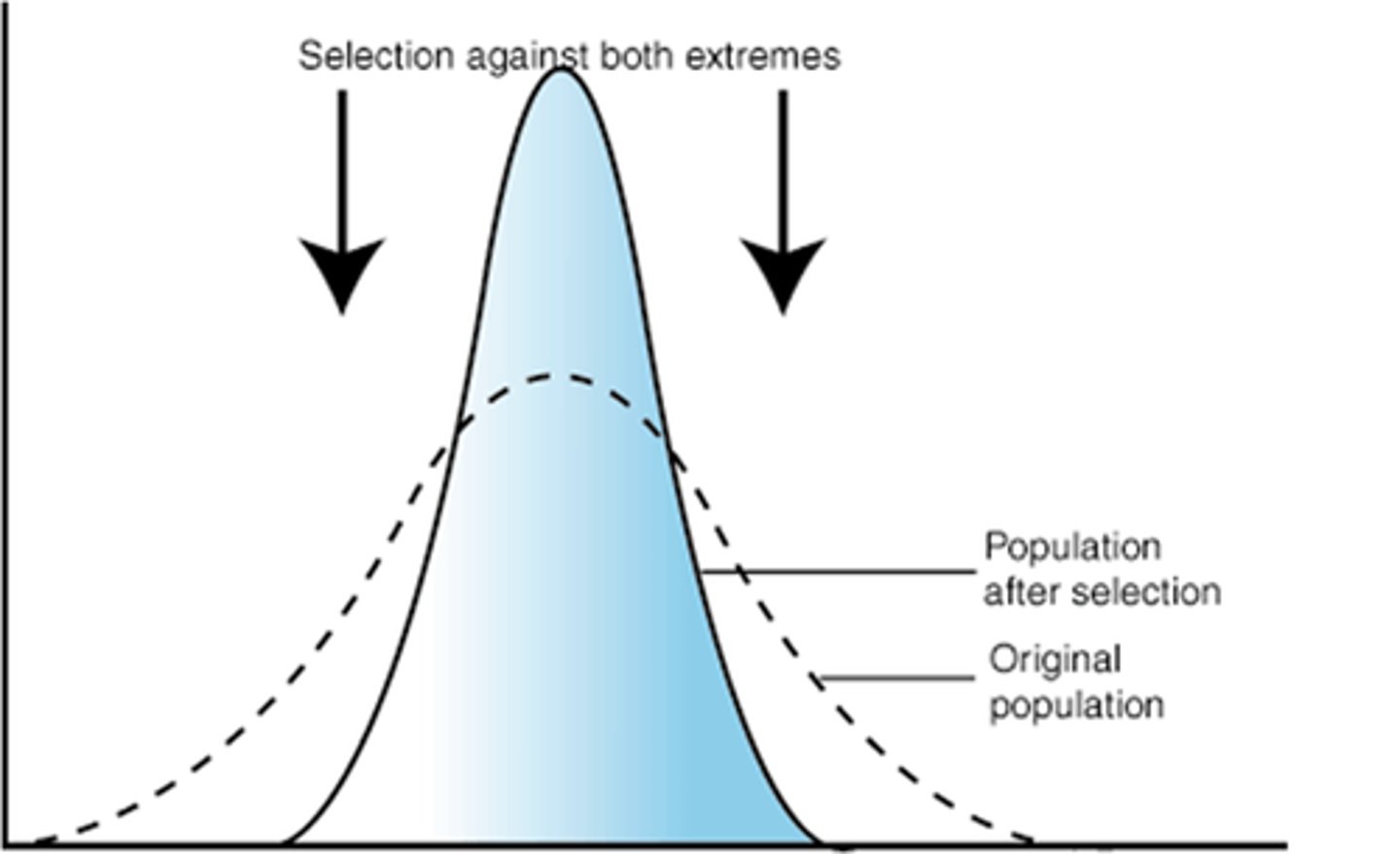
stabilizing selection
intrasexual
selection within the same sex (dominant male fends off weaker males and keeps females for himself)
intersexual
selection in which individuals of one sex are choosy in selecting their mates from the other sex (one sex chooses the flashiest suitor)
speciation
origin of new species
reproductive isolation
existence of biological factors (barriers) that impede members of two species from producing viable, fertile offspring.
biological
species concept that states that a species is a group of populations whose members have the potential to interbreed in nature and produce viable, fertile offspring; they do not breed successfully with other populations
morphological
species concept that defines a species by structural features
ecological
species concept that views a species in terms of its ecological niche
phylogenetic
species concept that defines a species as the smallest group of individuals that share a common ancestor
allopatric speciation
gene flow is interrupted when a population is divided into geographically isolated subpopulations
sypmatric speciation
speciation takes place in geographically overlapping populations
polyploidy
presence of extra sets of chromosomes
adaptive radiation
the rapid evolution of many diverse species from ancestral species
adaptive radiation
may follow mass extinctions, colonization of new regions, evolution of novel characteristics
spheres, rods, spirals
three most common shapes of prokaryotes
gram-positive bacteria
have simpler walls with a large amount of peptidoglycan
gram-negative bacteria
have less peptidoglycan and are structurally more complex, with an outer membrane that contains lipopolysaccharides
endospores
structure that can remain viable in harsh conditions for centuries
frimbriae
hairlike appendages that help cells adhere to other cells or to a substrate
pili
allow prokaryotes to exchange DNA
taxis
the ability for prokaryotes to move toward or away from a stimulus
flagella
most common structures used for movement in prokaryotes
rapid reproduction, mutation, genetic recombination
factors that contribute to large genetic diversity of prokaryotes
genetic recombination
combining of DNA from two sources
transformation
process in which one prokaryotic cell can take up and incorporate foreign DNA from the surrounding environment
transduction
movement of genes between bacteria by bacteriophages
conjugation
process where genetic material is transferred between prokaryotic cells
symbiosis
ecological relationship in which two species live in close contact: a larger host and a smaller symbiont
exotoxins
secreted and cause disease even if the prokaryotes that produce them are not present
endotoxins
released only when bacteria die and their cell walls break down
benefits for plants to move to land
more CO2, unfiltered sunlight, nutrient-rich soil
challenges for plants to move to land
scarcity of water, lack of structural support against gravity
gametophyte generation
haploid and produces haploid gametes by mitosis
diploid sporophyte
produces haploid spores by meiosis
rhizoids
anchor gametophytes to substrate
vascular plants
life cycles with dominant sporophyte; vascular tissues called xylem and phloem; well-developed roots and leaves; spore-bearing leaves called spophylls
common to all seed plants
reduced gametophytes, heterospory, ovules, pollen
carpels, stamens, petals, sepals
4 floral organs; all examples of modified leaves
angiosperm life cycle
gametophyte development, sperm delivery by pollen tubes, double fertilization, seed development
double fertilization
fusion of gametes that occurs after the two sperm reach the female gametophyte
double fertilization
one sperm fertilizes the egg and the other combines with the two polar nuclei, giving rise to triploid food-storing endosperm
imbibition
uptake of water due to low water potential of the dry seed
simple
fruits that develop from a single or several fused carpels
aggregate
fruits that result from a single flower with multiple separate carpels
multiple
fruits that develop from a group of flowers called an inflorescence
accessory
fruits that contain other floral parts in addition to ovaries
bryophyte
no vascular tissues, no leaves, gametophyte dominant, flagellated sperm, no seeds, no flowers, no fruit, no double fertilization
fern/fern allies
vascular tissues, leaves, sporophyte dominant, flagellated sperm, no seeds, no flowers, no fruit, no double fertilization
gymnosperms
vascular tissues, leaves, sporophyte dominant, wind-pollinated, seeds, no flowers, no fruits, no double fertilization
angiosperms
vascular tissues, leaves, sporohpyte dominant, (usually) animal-pollinated, seeds, flowers, fruits, double fertilization
anatomy
biological form of an organism
physiology
the biological functions an organism performs
regulator
uses internal control mechanisms to control internal changes in the face of external fluctuation
conformer
allows its internal condition to vary with certain external changes
negative
type of feedback that helps to return a variable to a normal range (figure 8)
positive
type of feedback that amplifies a stimulus and does not usually contribute to homeostasis in animals (one way arrow)
endotherm
generate heat by metabolism; more energetically expensive
ectotherm
gain heat from external sources
radiation, evaporation, convection, conduction
modes of heat exchange
metabolic rate
sum of all energy an animal uses in a unit of time
BMR
metabolic rate of an endotherm at rest at a "comfortable" temperature
SMR
metabolic rate of an ectotherm at rest at a specific temperature
age, sex, size, activity, temperature, and nutrition
key factors of metabolic rate
undernourishment
use up stored fat and carbs, break down its own proteins, lose muscle mass, suffer protein deficiency of the brain, die or suffer irreversible damage
filter feeders
sift small food particles from the water
substrate feeders
live in or on their food source
fluid feeders
suck nutrient-rich fluid from a living host
bulk feeders
eat relatively large pieces of food
intracellular
digestion in which food particles are engulfed by phagocytosis and liquids by pinocytosis
extracellular
digestion in which the breakdown of food particles occurs outside of cells
alimentary canal
digestive tube that extends from the mouth to the anus
circulatory fluid, set of vessels, a muscular pump
components of a circulatory system
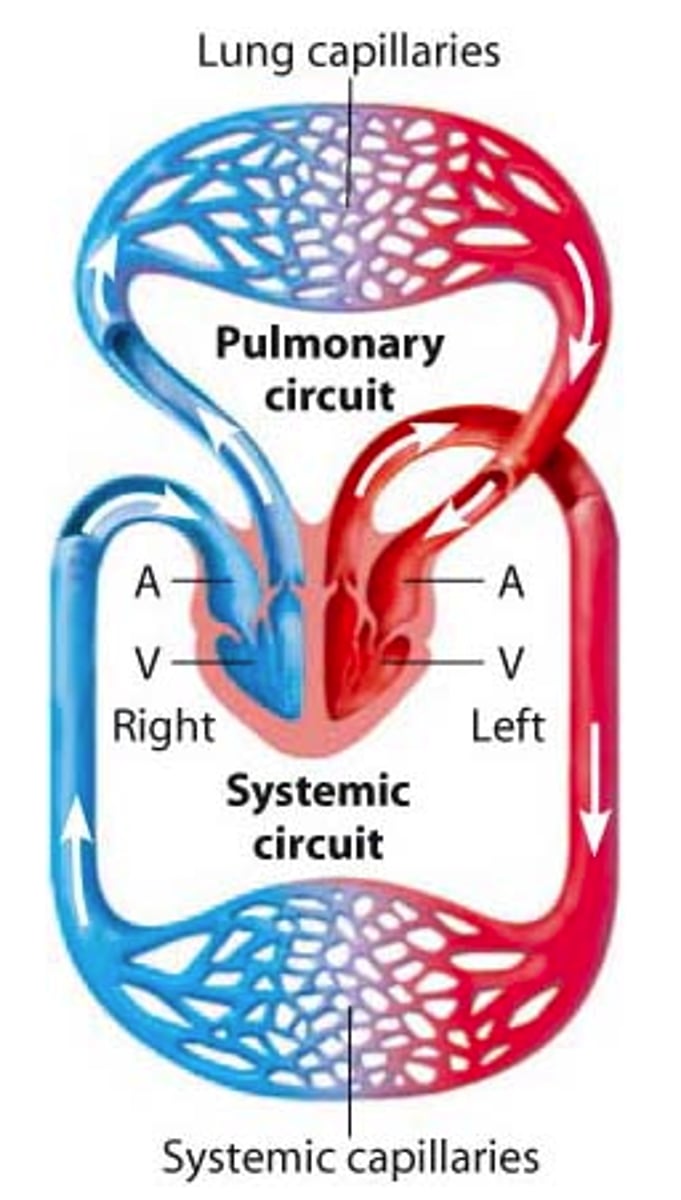
atrium
chamber of heart that blood enters through
ventricle
chamber of heart the blood is pumped out of
single circulation
blood leaving the heart passes through two capillary beds before returning
double circulation in mammals
venae cavae
largest veins in body that empty their blood into the right atrium
countercurrent exchange
blood flows in the opposite direction to water passing over the gills; reduces heat loss
tracheal system
consists of a network of branching tubes throughout the body of an insect