SDSU Bio 100 Lonjaret - EXAM 4 SPRING 2025
 Call Kai
 Learn
Learn Practice Test
 Spaced Repetition
 Match
Match Flashcards
 Knowt Play
1/126

There's no tags or description
Looks like no tags are added yet.
Name | Mastery | Learn | Test | Matching | Spaced | Call with Kai |
|---|
No analytics yet
Send a link to your students to track their progress
127 Terms
Proteins are diverse molecules that perform a wide variety of functions. Which of the following is NOT a typical function of proteins?
Energy storage
What are the monomers of proteins?
Amino Acids
What might happen if a protein has a change in one amino acid?
The protein can no longer function properly, The amino acid chain folds incorrectly., The protein has a new shape
Enzymes are a type of ________.
protein
A protein's function is largely determined by its _____.
shape
The primary structure of a protein is like the arrangement of beads on a string. In this analogy, the beads are _____.
amino acids
A protein's α helices and β sheets form their shapes at the _____ level of protein structure.
second
What happens to the shape and function of a protein if one of the amino acids is replaced with a different type of amino acid?
It depends on the role of the amino acid that is altered. One amino acid might be replaced with no measurable effect on the protein's function; replacing another might cause a total loss of function.
Large proteins, like DNA polymerase and hemoglobin, are often composed of several polypeptides that are linked together. The _____ level of protein structure describes how the polypeptides are joined to create a larger complex.
fourth
During digestion, __________ are broken down into __________ through __________ reactions.
proteins; amino acids; hydrolysis
What is the role of the villi?
To absorb small nutrient molecules from the digestive tract
Where does most of the absorption of food nutrients take place?
In the small intestine
An essential nutrient is specifically a nutrient that your body ________.
cannot make by itself
Most of the body is _____
water (H20)
2nd most abundant molecules are _____
C-based
Four elements making up bulk of human cells
Oxygen, carbon, hydrogen, nitrogen
Oxygen make up of living cells
65%
Sulfur make up of living cells
.3%
Hydrogen make up of living cells
9.5%
Nitrogen make up of living cells
3.3%
Carbon make up of living cells
18.5%
Molecules that contain C bonded to other elements are called
organic compounds
Sets of atoms attached to the C skeleton are called
functional groups
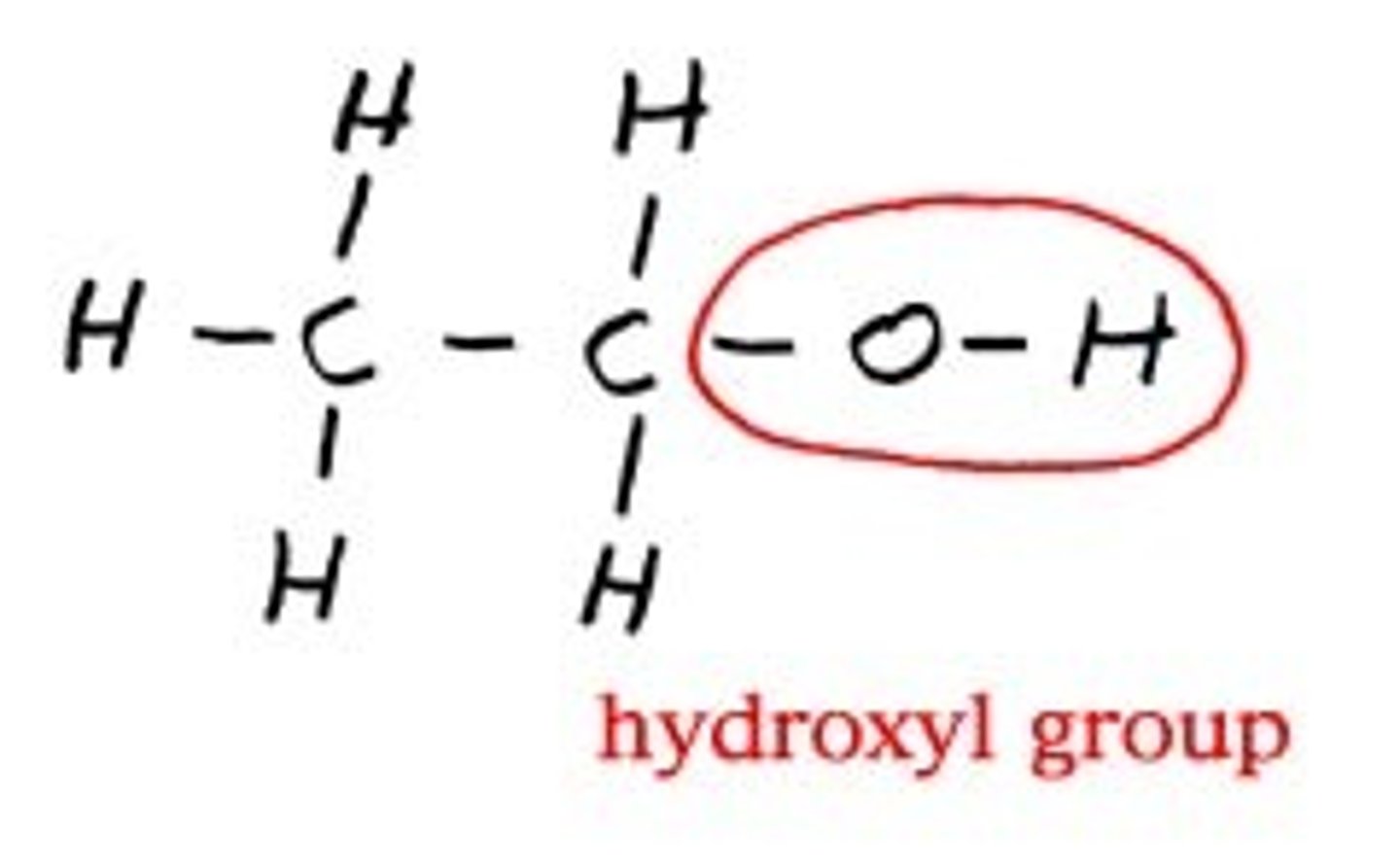
Hydroxyl group
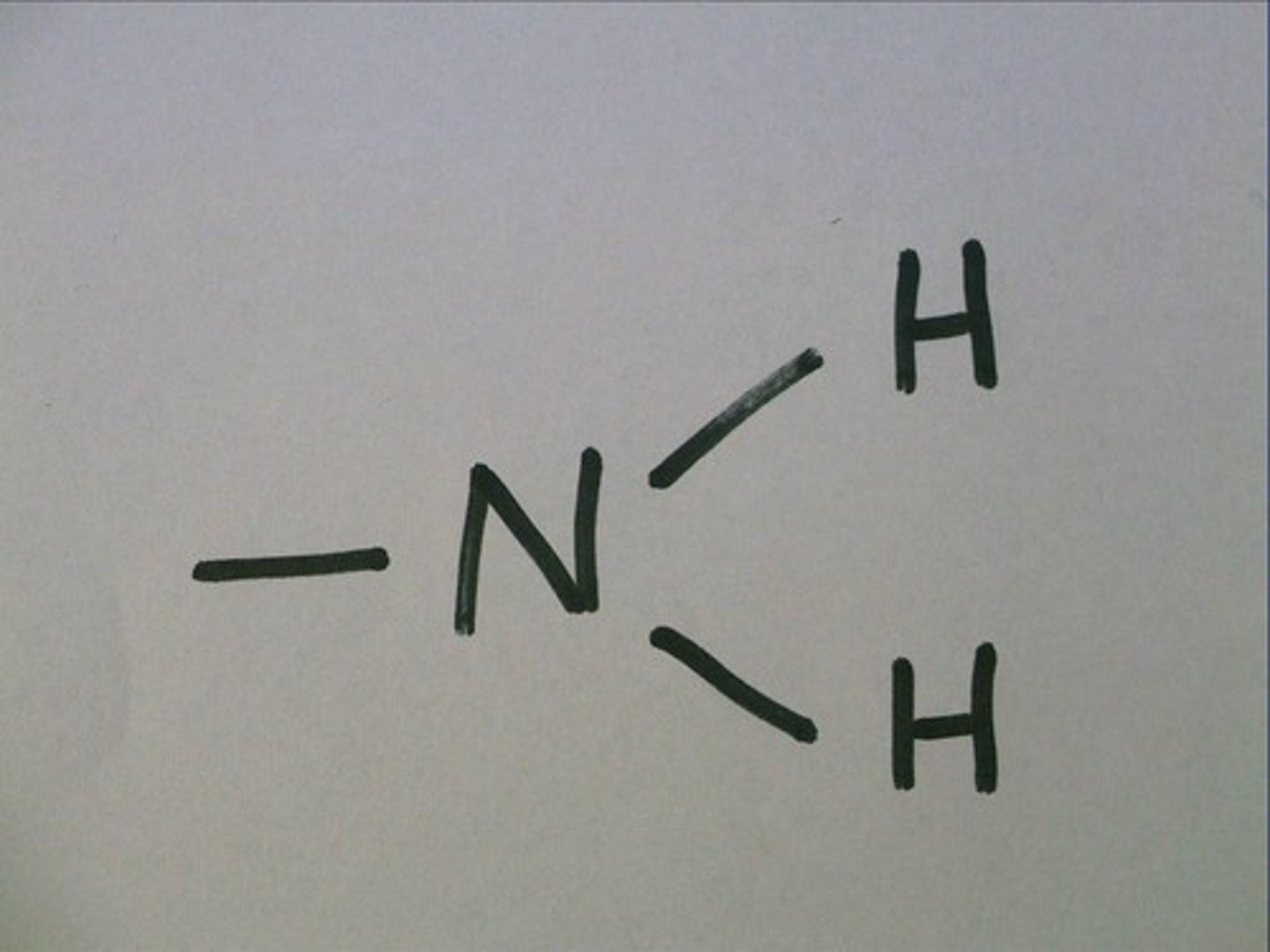
Amino Group
NH2
Macromolecules are
large molecules with a complex structure; most organic molecules
Polymers are
what makes up macromolecules; chains whose links are smaller molecules called monomers
4 classes of organic molecules important to life
Carbohydrates, proteins, lipids, nucleic acids
Keratin is an important component of
hair and nails
Enzymes
are always proteins and are any word ending in -ase
Proteins are polymers of
amino-acids
Monomers (amino acids) become
polymers (proteins)
Dehydration is a
H20 synthesis reaction
Polypeptide is a
chain of amino acids (twists and folds lead to a unique 3d shape)
Protein structure and function are determined by
a precise amino-acid sequence (and may not perform if the sequence is changed)
Dense irregular connective tissue
In the dermis: resists tension in any direction (isotropic)
Dense regular connective tissue
In tendons and ligaments: resists tension in same direction always like a rope (anisotropic)
Transmembrane proteins
three ion pumps, highly specific to an ion
Apamin
bee venom, smallest protein venom
anywhere you see covalent bonds (h2n=0) bonds go no where it is a ____.
Carbon bond
Complete protein meals
Require us to obtain 9 essential amino acids from our diet (other 11 come from self synthesis)
Complete proteins
have all essential Amino Acids, usually from animal products
Incomplete proteins
Often from plants
Complementary proteins
eaten together, yield all the essential amino acids
the number of protons in the nucleus of an atom, which determines the chemical properties of an element and its place in the periodic table.
atomic number
The number of protons plus neutrons in an atom, represented as an average of all naturally occurring forms of the element, is known as
atomic weight
also called micronutrients, are any chemical element required by living organisms in miniscule amounts, but cells require them to survive.
trace elements
is one of the four elements that make up 96.3% of living cells.
nitrogen
The bond in which bonded atoms share electrons is called a(n) ________.
covalent bond
____ is one of the fourteen trace elements and is a component of certain digestive enzymes and other proteins.
zinc
_____ is one of the seven elements that make up a small fraction, approximately 3.7%, of living cells.
calcium
Individual water molecules are held to one another by relatively weak ________ bonds.
hydrogen
The breaking of a large organic molecule into smaller, individual subunits involves multiple ________.
hydrolysis reactions
What is another name for the polymers of carbohydrates?
Polysaccharides
Part complete
Starch and glycogen are complex carbohydrates made by joining together long chains of __________ molecules.
glucose
In what ways are the chemical reactions of photosynthesis and cellular respiration similar?
Both release heat as a waste product.
Which of the following is a common energy currency in living cells that powers most living organisms?
ATP
What is the main purpose of cellular respiration?
make ATP
The food you eat is processed during cellular respiration to produce stored chemical energy in the form of __________, with __________ and __________ as by-products.
ATP; CO2; water
How is diabetes linked with homeostasis?
Diabetes results from the body not responding with a negative feedback to the level of glucose in the blood.
How does yeast make bread dough rise?
yeast cells produce o2
What kinds of molecules can be used as metabolic fuel to produce ATP?
Sugars, amino acids, and fatty acids
correct sequence of structures of the urinary system in the creation to the excretion of urine?
Kidneys, ureter, urinary bladder, and urethra
What is the name of the tubes that run from the kidneys to the bladder?
ureters
What is the basic structure of typical dietary fats?
A glycerol head and up to three fatty acid tails
All lipids are ________.
hydrophobic
What molecules are constituents of cell membranes?
Phospholipids, proteins, carbohydrates, and cholesterol
During which stage of cellular respiration is the majority of the ATP produced?
Electron transport chain
Which of the following cells contain a plasma membrane?
animal, plant, bacterial cells
Which would most likely pass unaided through a plasma membrane?
Something small and nonpolar, such as nitrogen gas
How does CO2 move from your blood cells into your lung cells?
Passive transport
The presence of many C-C and C-H bonds causes fats to be ..
rich in energy and insoluble in water
In fat synthesis,________and fatty acids combine to make fats plus________.
glycerol; water
In the reaction that builds a fat,________ groups react with ________ groups
hydroxyl; carboxyl
Triglycerides vary with respect to the number of ...
C atoms in the tails and double bonds in the tails
A food company hydrogenated a barrel of fat. The treatment ..
made the fat less fluid.
The most unsaturated fats have ...
the most double bonds.
What do DNA, proteins, and fats have in common?
They contain carbonyl groups.
Fatty acid chain of HO-C-CH2-CH2-etc
Carbon acid chain
Lipids are ______.
Hydrophobic
Cell membranes are 2 stacked layers of
phospholipids
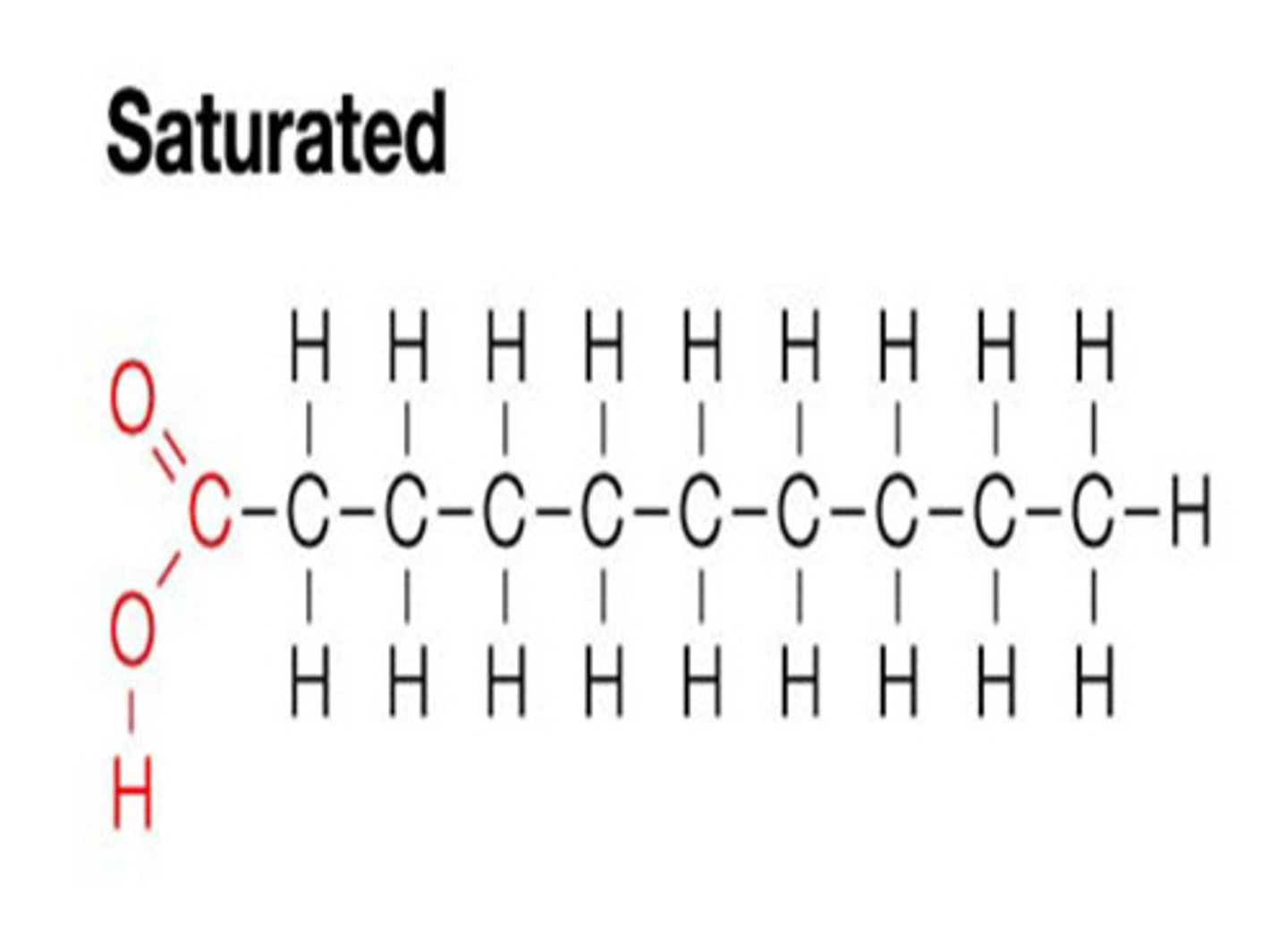
Saturated fats
single bonds only
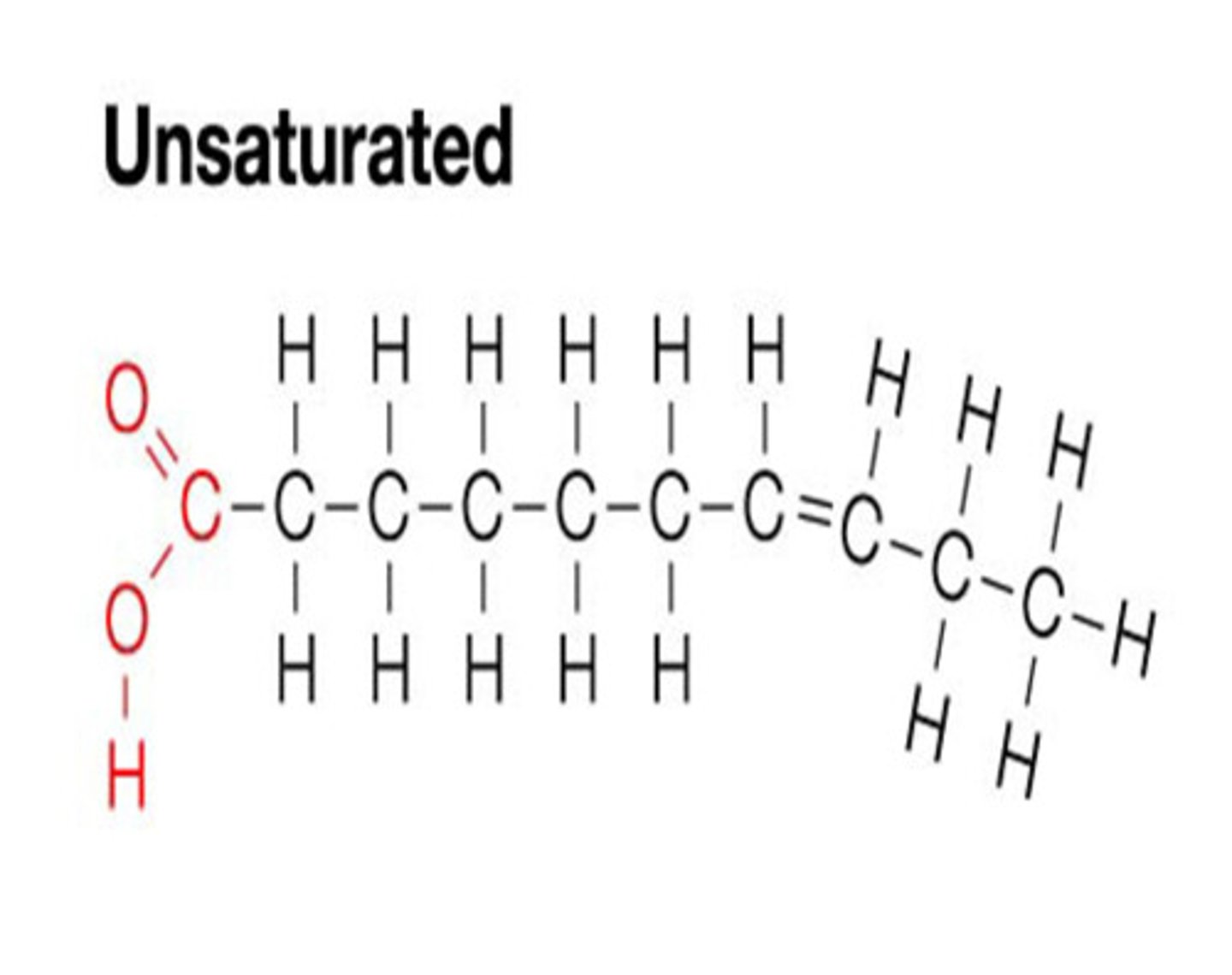
Unsaturated fats
Includes a double bond (curved bond)
Characteristics of saturated fats
Contains maximum number of H
Solid at room temperautre
All C-C single bonds
Characteristics of unsaturated fats
Less than maximum number of H
Liquid at room temperature
Some C=C bonds
Foods rich in _____ fats are part of a balanced diet
Essential
Fats containing ______ reduce risk of heart disease
w-3 fatty acids
3 fatty acids is _______
triglycerides
Roles of cholesterol
Maintain fluidity in animal cell membranes
Steroid hormone synthesis
Low-density lipoprotein
"bad cholesterol" - levels can be increased through poor diet
High density lipoprotein
"good cholesterol" Levels can be increased through exercise
Where cholesterol is found
animal derived foods such as eggs and red meat
Carbohydrates include _____ that function as fuel
macromolecules
_______ are a common source of dietary energy for animals and important building blocks of plants and are a primary source of energy
carbohydrates
________ are composed of simple sugars
carbohydrates
Individual saccharide molecules are simple sugars also known as
monosaccharides
Carbohydrates consist of one or more
monosaccharides joined together
Simple carbohydrates are
"hydrated C"
Glucose, Fructose, Galactose makeup
C6H12O6
Three fates of blood sugar
Fuel for cellular activity
Glycogen for temporary storage
Fat for long term energy storage