SJSU MICR20 CHAPTER 13
 Call Kai
 Learn
Learn Practice Test
 Spaced Repetition
 Match
Match Flashcards
 Knowt Play
1/133

There's no tags or description
Looks like no tags are added yet.
Name | Mastery | Learn | Test | Matching | Spaced | Call with Kai |
|---|
No analytics yet
Send a link to your students to track their progress
134 Terms
human body & microorganisms
- human body in a state of dynamic equilibrium
- interaction b/w human body & microorganisms involve development of biofilms
- colonization of body involves constant "give & take)
most significant interactions of microbes
- provide protective & stabilization effect on body surfaces
- involved in maturation of host defenses & development of immune system
- invade & grow in sterile tissues, causing disease
normal resident microbiota
- microbes that engage in mutual or commensal associations w/ humans
- aka indigenous, microflora, normal flora, & commensals
infection
condition in which pathogenic microbes penetrate host defenses, enter tissues, & multiply
pathogen
microbe acting as infectious agent
infectious disease
infection that causes damage or disruption to tissues
microbe-free
- internal organs, tissues, fluids
- most areas of body in contact w/ outside environment harbor resident microbes
transients
- microbes that occupy the body for only short periods
- cling to surface, but doesn't grow there
- influenced by hygiene
residents
- microbes that become established
- stable, predictable
- less influenced by hygiene
- primarily bacteria & yeasts
sites that harbor normal resident microbes
- skin
- upper respiratory tract
- GI tract
- outer opening of urethra
- external genitalia
- vagina
- external ear & canal
- external eye
microbial antagonism
- microbiota benefits host by preventing overgrowth of harmful microbes
endogenous infections
- occur when normal flora is introduced to a site that was previously sterile
- infection caused by an infectious agent that is present or in host prior to start of infections
microbiota
- generally stable, but fluctuates w/ general health, age, diet, hygiene, hormones, & drug therapy
microbe-free sites
- heart & circulatory system\
- liver
- kidney & bladder
- lungs
- brain & spinal cord
- muscles
- bones
- ovaries/testes
- glands (pancreas, salivary)
- sinuses
- middle & inner ear
- internal ear
microbe-free fluids
- blood
- urine in kidney, ureters, bladder
- cerebrospinal fluid
- saliva prior to entering oral cavity
- semen prior to entering urethra
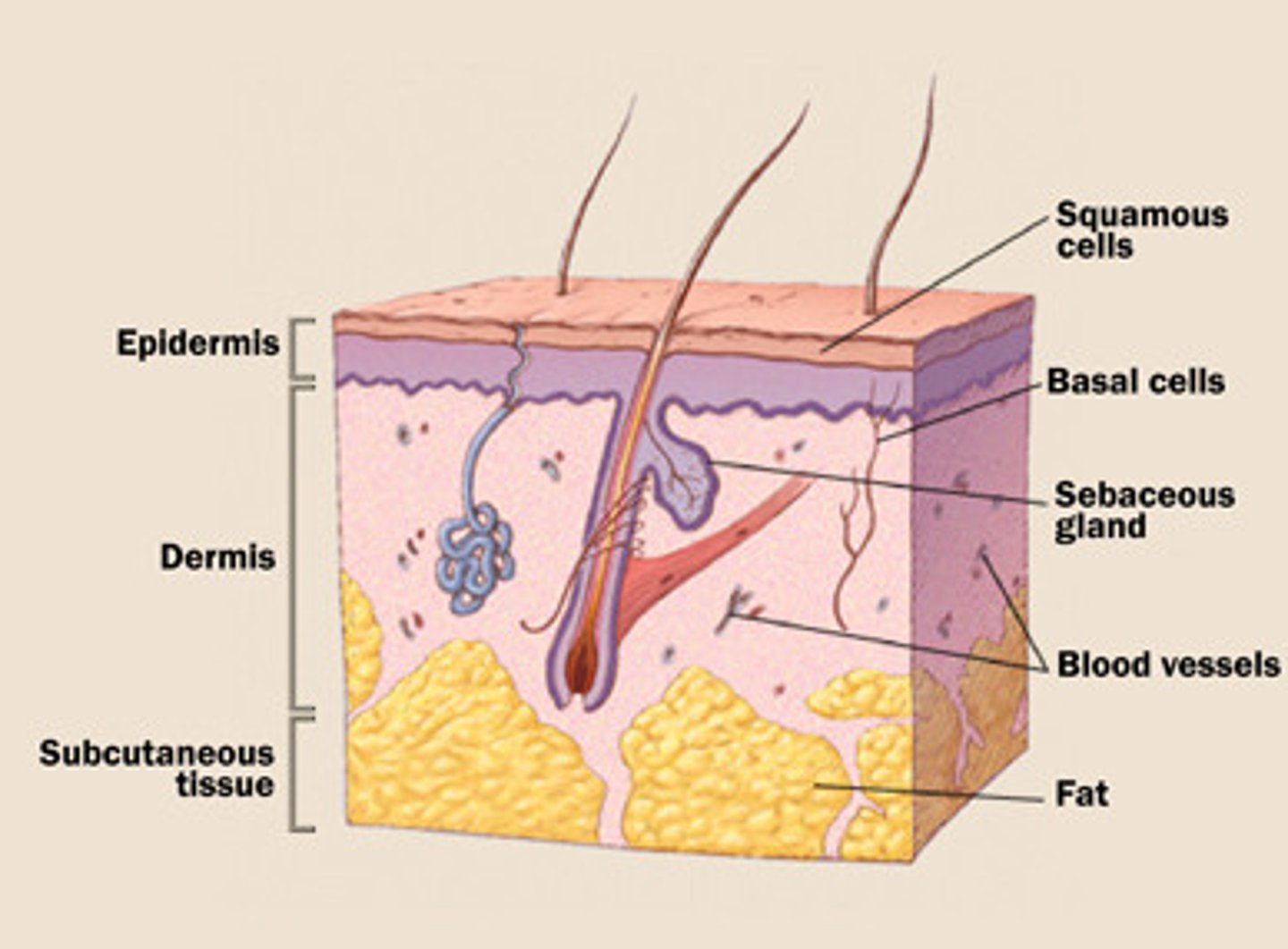
skin
- largest & most accessible organ
- 2 cutaneous pop.: transients & residents
microbiota of gastrointestinal tract
- long hollow tube; exposed to environment
- bounded by mucous membranes
- variations in flora distribution due to shifting conditions (pH, oxygen tension, anatomy)
- oral cav., LI, & rectum harbor appreciable flora
microbiota of mouth
- most diverse & unique flora of body
- numerous adaptive niches in microhabitats
- cheek epithelium, gingiva, tongue, floor of mouth, & tooth enamel
- teeth eruption establish anaerobic habitat in gingival crevice favoring colonization by anaerobic bac.
most common residents of mouth
- aerobic Streptococcus species
- S. sanguis, S. salivararius, S. mitis
bacterial count of saliva
5 x 10^9 cells/mL
microbiota of large intestine
- complex & profound interactions w/host
- 10^8 to 10^11 microbes/gm of feces (more or equal to 30% fecal vol.)
- intestines favor anaerobic bac.
bacteria in large intestine
- Bacteroids
- Bifidobacterium
- Fusobacterium
- Clostridium
microbiota useful byproducts to host
- fermentation of waste material in feces generates vitamins & acids
- B12, K, pyridoxine, riboflavin & thiamine
- acetic, butyric, & propionic
- bacterial digestive enzymes that convert disaccharides to monosaccharides or promote steroid metabolism
- intestinal bac. contribute to intestinal odor
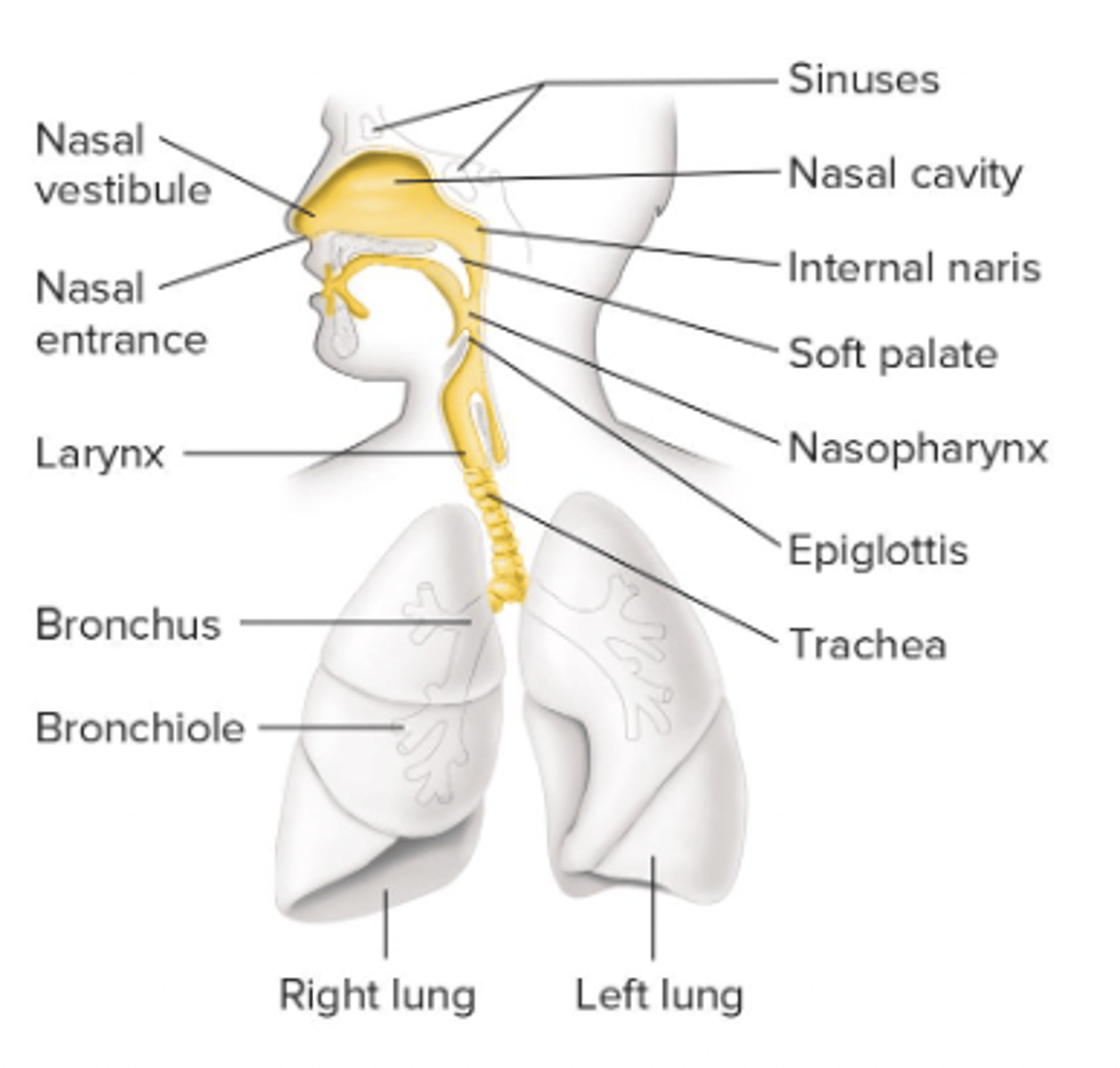
inhabitants of respiratory tract
- first organisms to colonize: oral streptococci
- Staphylococcus aureus: nasal entrance, nasal vestibule, anterior nasopharynx
- Neisseria species; mucous membranes of nasopharynx
- Assorted streptococci & Haemophilus: tonsils & lower pharynx
- no flora in bronchi & lungs
microbiota of genitourinary tract
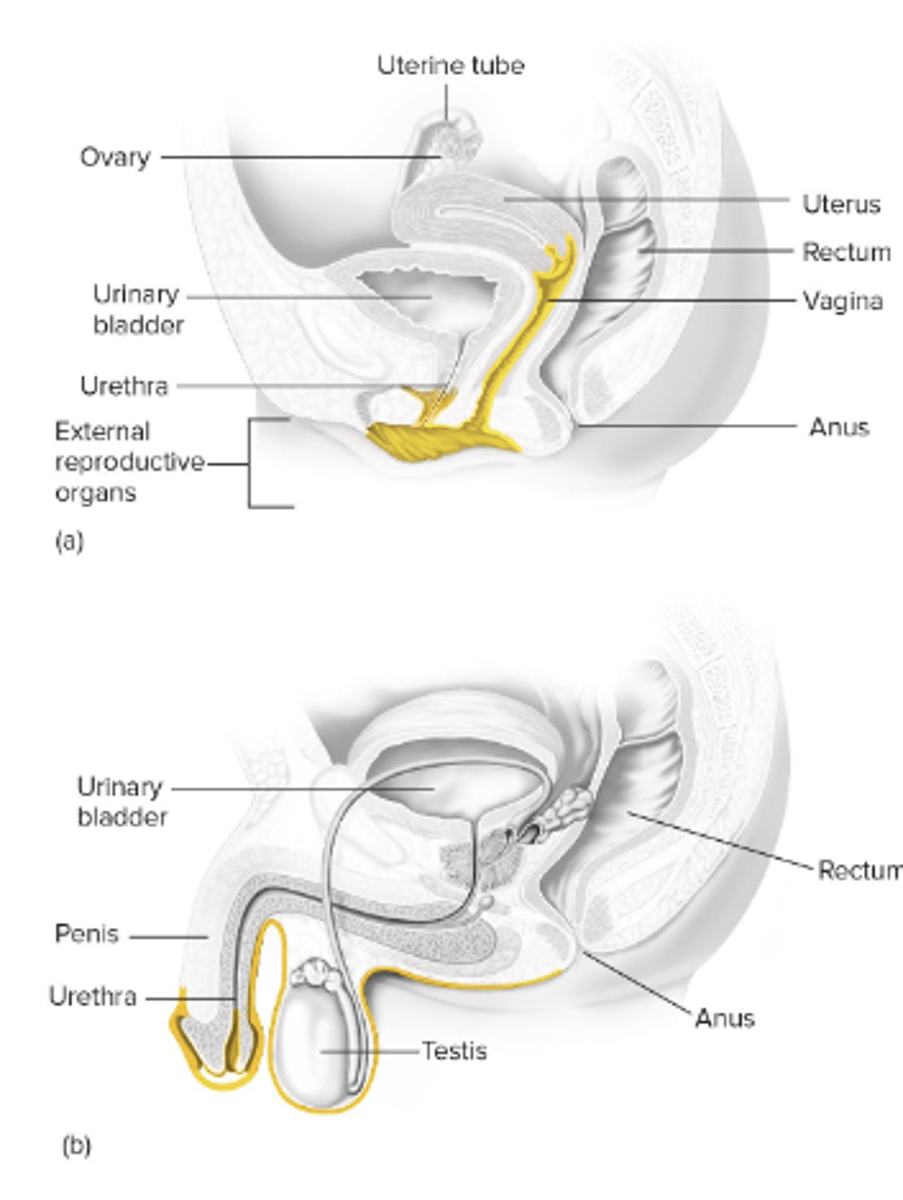
- internal reproductive organs kept sterile through physical barriers (cervical plug)
- kidney, ureter, bladder, & upper urethra kept sterile by urine flow & bladder emptying
sites of genitourinary tract that harbor microflora
- female: vagina & outer opening of urethra
- male: anterior urethra
changes in physiology influence composition of normal flora
- estrogen
- glycogen
- pH
maintenance of normal microbiota
- normal flora is essential to health of humans
- flora create environment that prevent infections & enhance host defenses
- antibiotics, dietary changes, & disease may alter flora
- probiotics
probiotics
introduce known microbes back into body
development of infection
1. finding portal of entry
2. attaching firmly
3. surviving host defenses
4. cause damage & disease
5. exiting host
portal of entries
- skin
- GI tract
- respiratory tract
- urogenital tract
- endogenous biota
how pathogens attach
- fimbriae
- capsules
- surface proteins
- viral spikes
- hooks
how pathogens survive host defenses
- avoid phagocytosis
- avoid death inside phagocyte
- evade actions of immune system
phagocyte
- type of immune cell
- play role in body's defense against pathogens
- macrophage
- neutrophils
- dendritic cells
- eosinophils
phagocytosis
- cellular process in which phagocytes engulf & digest large particles
- large particles: pathogens, dead cells, & debris
causes of damage & disease
- direct damage: toxin, enzymes, & lysis
- indirect damage: host response is inappropriate & excessive
portals of exit
- respiratory tract, salivary glands
- skin cells
- fecal matter
- urogenital tract
- blood
factors that weaken host defense & increase susceptibility to infection
- old age & extreme youth
- genetic defects in immunity & acquired defects in immunity
- surgery & organ transplants
- organic disease: cancer, liver malfunction, & diabetes
- chemotherapy/immunosuppressive drugs
- physical & mental stress
- other infections
true pathogens
- capable of causing disease in healthy persons w/normal immune disease
- influenza virus, plague bacillus, malarial protozoan
opportunistic pathogens
- cause disease when host's defenses are compromised or when they grow in part of the body that is not natural to them
- Pseudomonas sp. & Candida albicans
virulence factor
- characteristic or structure that contributes to ability of a microbe to cause disease
- severity of disease depends on virulence of pathogen
portal of entry definition
characteristic route a microbe follows to enter tissue of body
exogenous agents
originate from source outside the body
endogenous agents
already exist on or in body (normal flora)
portal of entry: skin
nicks, abrasions, punctures, incisions
portal of entry: GI tract
food, drink, & other ingested materials
portal of entry: respiratory tract
oral & nasal cavities
portal of entry: urogenital tract
sexual, displaced organisms
portal of entry: transplacental
pathogens transferred from mother to fetus through placenta
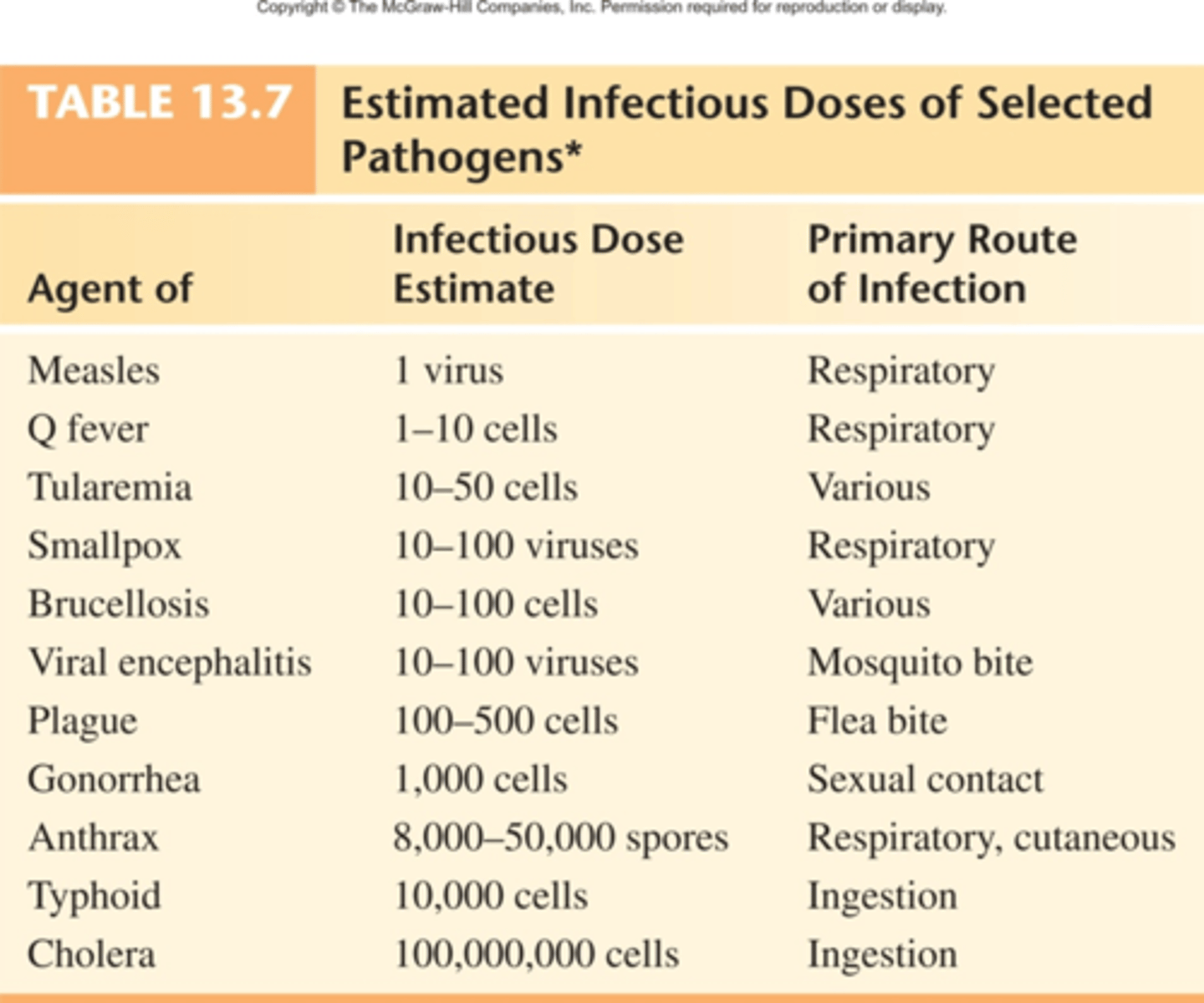
infectious dose (ID)
- minimum number of microbes required for infection to proceed
- microbes w/small IDs have greater virulence
- lack of ID will not result in infection
estimated infectious doses of selected pathogens
adhesion
- microbes gain stable foothold at portal of entry
- dependent on binding b/w specific molecules on host & pathogens
toxin
specific chemical products of microbes, plants, & some animals that has poisonous effects on other organ
toxinoses
adverse effects of toxins
toxemias
- when toxin is spread by blood from site of infections
- tetanus, diphtheria
intoxications
caused by ingestion of toxins (botulism)
types of bacterial toxins
- endotoxin
- exotoxin
endotoxin
- not secreted, but released after host cell is damaged
- composed of part of outer membrane of gram-negative cell walls
exotoxin
- secreted by a living bacterial cell into infected tissue
- strong specificity for a target cell, disrupting membrane
- hemolysins
- A-B toxins (A-active, B-binding)
hemolysins
disrupt membrane of red blood cells, killing them
differential characteristics of bacterial exotoxins and endotoxins
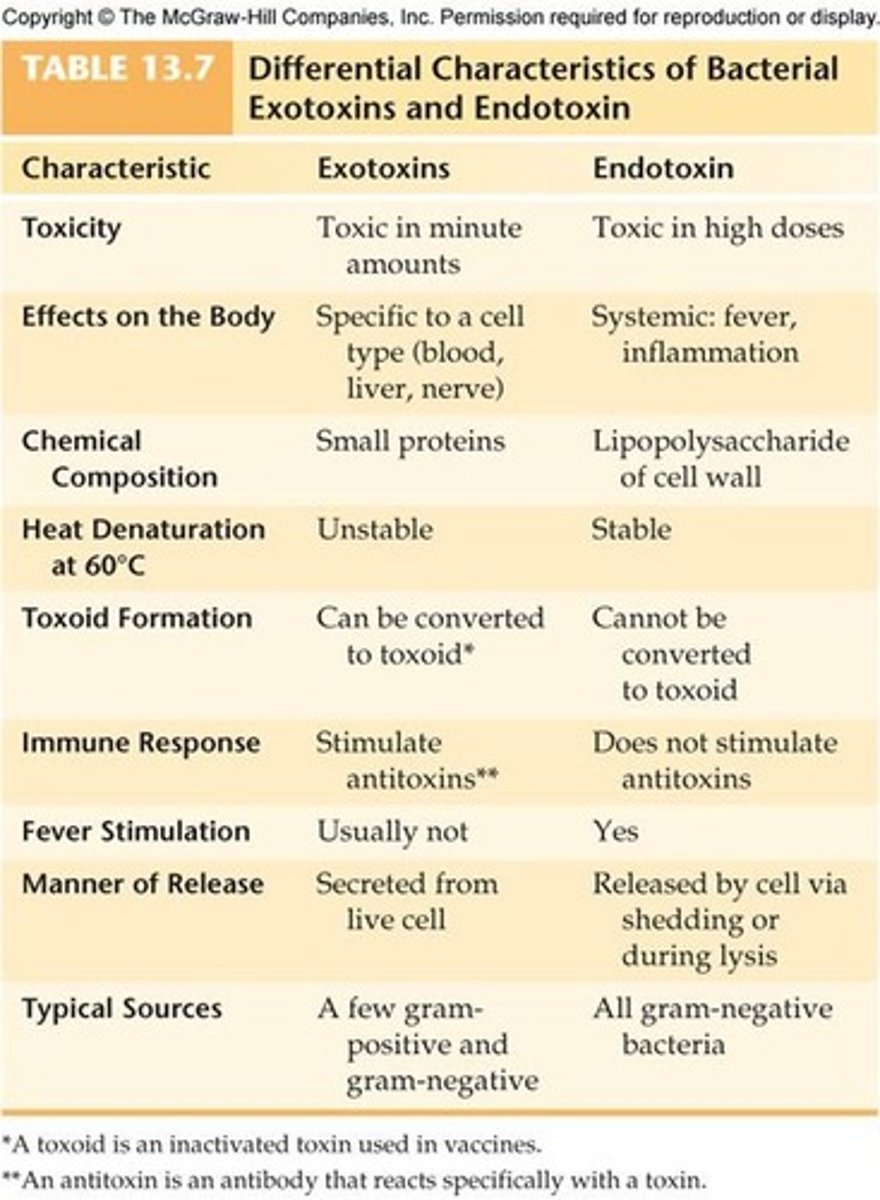
toxoid
inactivated toxin used in vaccines
antitoxin
antibody that reacts specifically w/toxin
four distinct stages of clinical infectious
1. incubation period
2. prodromal stage
3. period of invasion
4. convalescent period
incubation period
- time from initial contact w/infectious agent to appearance of first symptoms
- agent is multiplying but damage is insufficient to cause symptoms
- several hours to several years
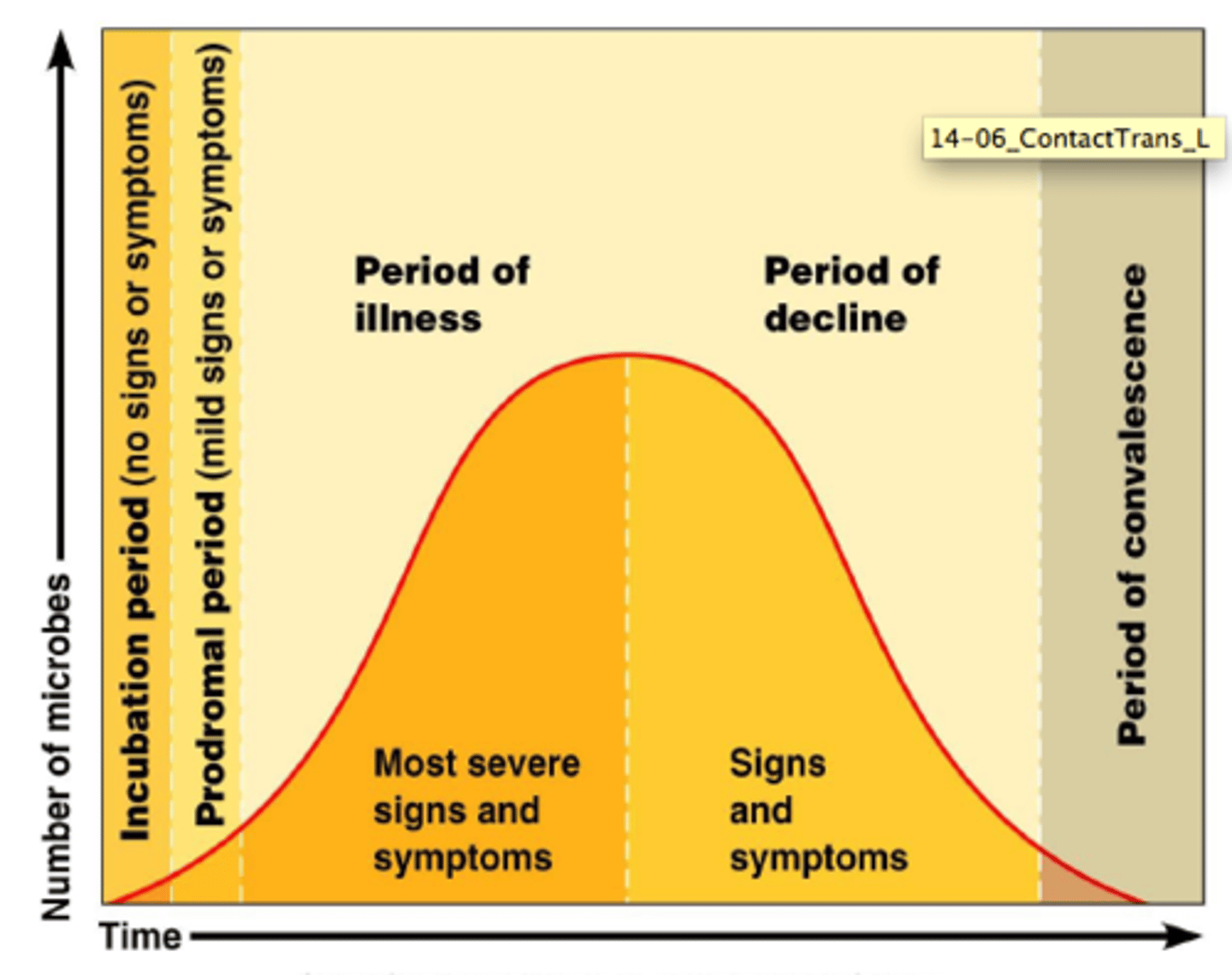
prodromal stage
- vague feelings of discomfort
- nonspecific complaints
period of invasion
- multiplies at high levels
- becomes well-established
- more specific signs to symptoms
patterns of infection
- localized infection
- systemic infection
- focal infection
- mixed infection
localized infection
- microbes enter body & remains confined to a specific tissue
systemic infection
infection spreads to several sites & tissue fluids usually in bloodstream
focal infection
when infectious agent breaks loose from a local infection & is carried to other tissues
mixed infection
- several microbes grow simultaneously at infection site
- polymicrobial
primary infection
initial infection
secondary infection
subsequent infection by a different microbe
acute infection
comes on rapidly & sever, but short-lived effects
chronic infections
progress & persist over long period of time
sign
objective evidence of disease as noted by an observer
symptom
subjective evidence of disease as sensed by patient
common signs and symptoms of infectious disease
- fever: chills
- septicemia: pain, irritation
- microbes in tissue fluids that should be sterile: nausea
- abnormal chest sounds: malaise, fatigue
- skin eruptions: chest tightness
- leukocytosis: itching
- leukopenia: headache
- swollen lymph nodes: weakness
- abscesses: abdominal cramps
- increased heart rate (tachycardia): anorexia
- antibodies in serum: sore throat
earliest symptoms of disease as a result of activation of body defenses
- fever, pain, soreness, swelling
signs of inflammation (lesions)
- edema
- granulomas & abscesses
- lymphadenitis
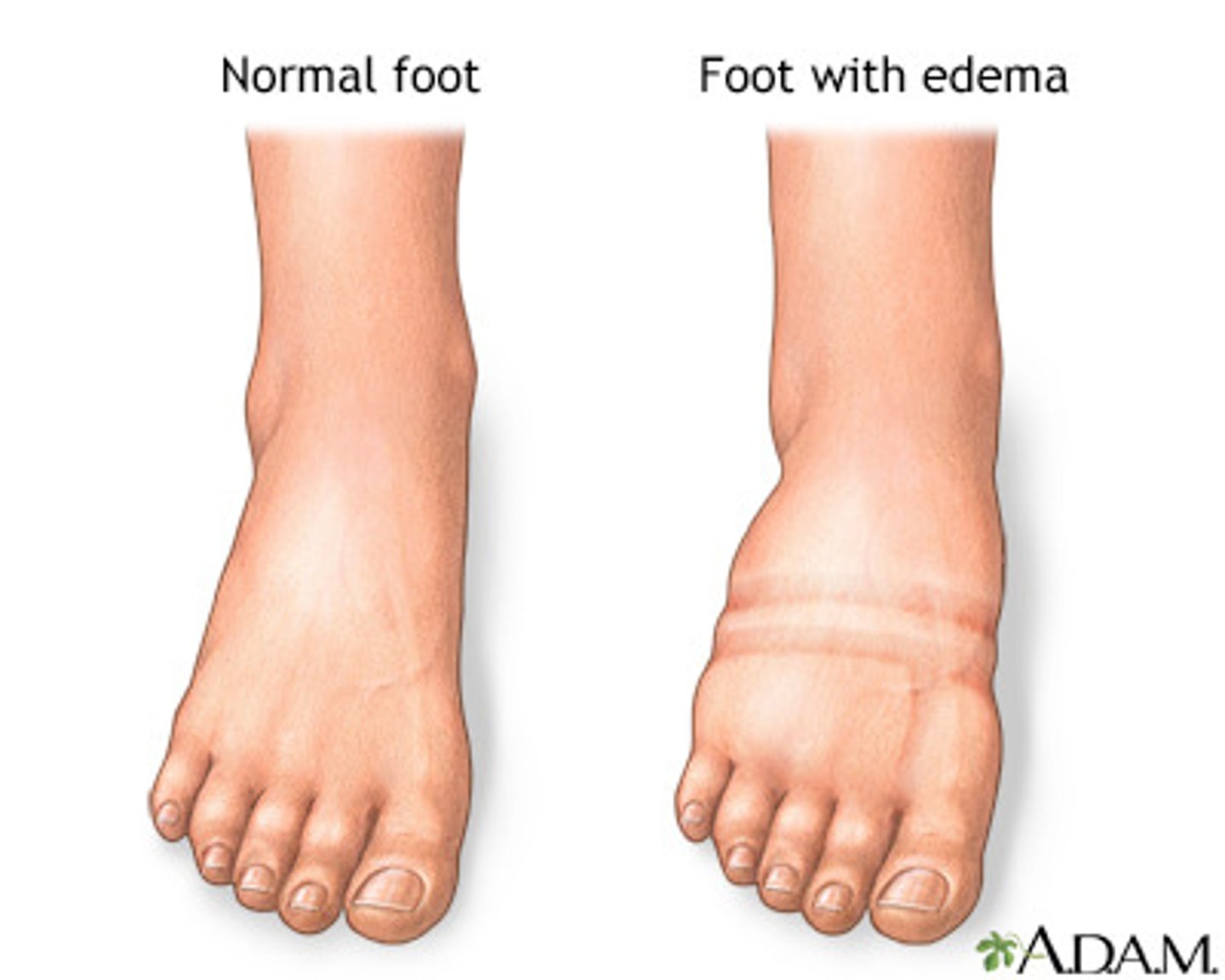
edema
accumulation of fluid
granulomas & abscesses
walled-off collections of inflammatory cells & microbes
lymphadenitis
swollen lymph nodes
changes in number of circulating white blood cells
- leukocytosis
- leukopenia
- septicemia, bacteremia, viremia
leukocytosis
increase in WBCs
leukopenia
decrease in WBCs
septicemia
microorganisms multiplying in blood & present in large numbers
bacteremia
small numbers of bacteria present in blood not necessarily multiplying
viremia
small number of viruses present in blood, not necessarily multiplying
asymptomatic (subclinical) infections
- although infected, host doesn't show any signs of disease
- rather common for an infection to produce no noticeable or typical symptoms
- inapparent infection, patients experience no symptoms, so doesn't seek medical attention
portals of exit definition
- pathogens depart by a specific avenue
- greatly influences the dissemination/spreading of infections
persistence of microbes & pathogenic conditions
- apparent recovery of host does not always mean microbe has been removed
- latency
- chronic carrier
- sequelae
latency
- after initial symptoms in certain chronic diseases, microbe can periodically become active & produce a recurrent disease
- person may or may not shed it during latent stage
chronic carrier
- person w/a latent infection who sheds the infectious agent fora long period
sequelae
long-term or permanent damage to tissues or organs
epidemiology
- study of frequency & distribution of disease & other health-related factors in defined human pop.
- involves many disciplines - not only microbiology, but anatomy, physiology, immunology, medicine psychology, sociology, ecology, & statistics
- considers many disease other than infectious ones, including heart disease, cancer, drug addiction, & mental illness
reservoir
- primary habitat of pathogen in natural world
- human or animal carrier, soil, water, plants
source
individual or object from which an infection is actually acquired
carrier
- individual who inconspicuously shelters a pathogen & spread it to others
- asymptomatic carrier
- passive carrier