Midterm Review (Lecture 6, 7)
 Call Kai
 Learn
Learn Practice Test
 Spaced Repetition
 Match
Match Flashcards
 Knowt Play
1/48

Earn XP
Description and Tags
neuropharmacology and Sensory transduction
Name | Mastery | Learn | Test | Matching | Spaced | Call with Kai |
|---|
No analytics yet
Send a link to your students to track their progress
49 Terms
Neuropharmacology
the scientific study of how drugs, medications, and chemicals affect the cellular and molecular functions of the nervous system.
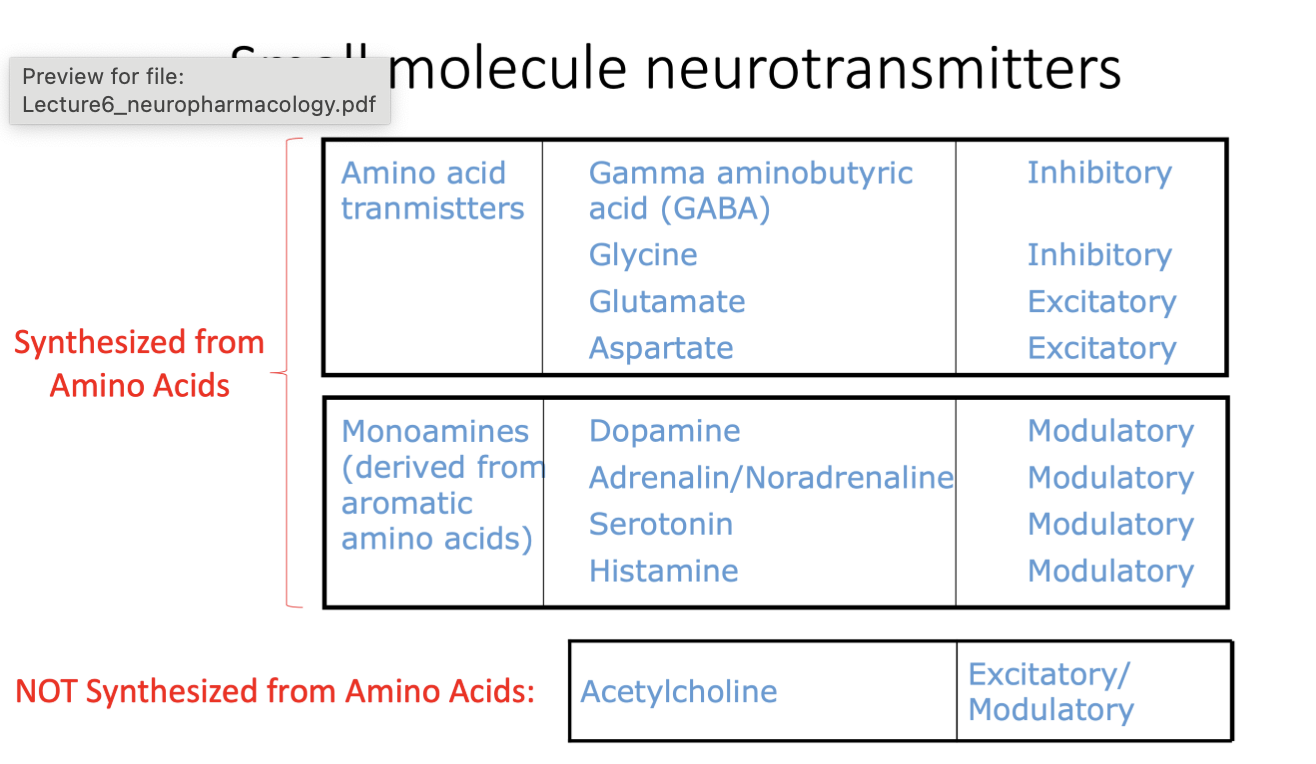
what are the 2 major types of NTs?
small molecule NTs (classical NTs) — modified amino acides (except for acetylcholine, which is synthesized from a b-vitamine nutrient called choline)
neuropeptides (which often function as hormones to send signals over long distances) are small protein molecules (sequences of several amino acids)
proteins
chained molecules formed by animo acids
glutamate synthesis
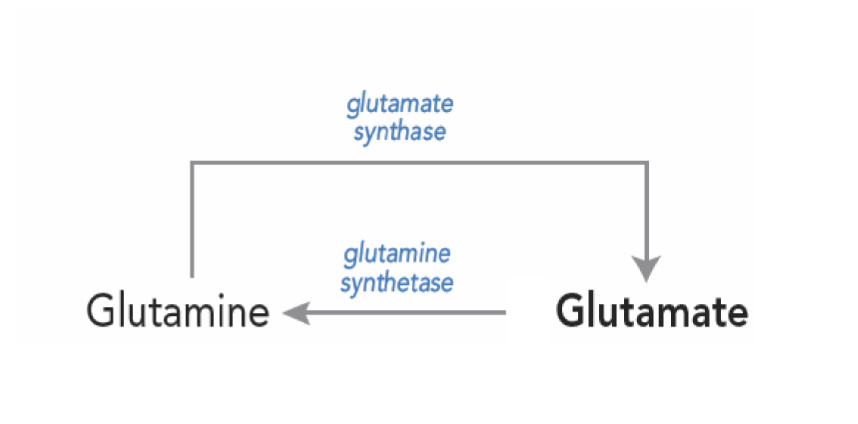
glutamate is the dominant excitatory NT in the brain, so it is synthesized in many, many neurons
an enzyme called glutamate synthase converts glutamine into glutamate
GABA synthesis
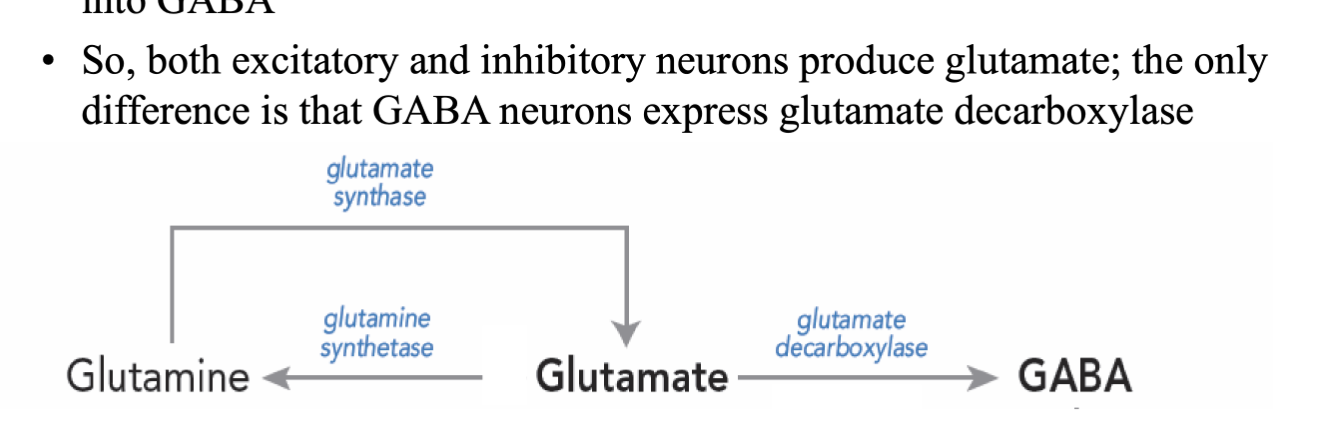
Gamma-amino-butyric acid (GABA) is the dominant inhibitory NT in the CNS
an enzyme called glutamate decarboxylase (GAD) converts glutamate into GABA
why does glu excite while GABA inhibits?
because they bind to different postSYN receptors
the response of the postSYN neuron is determined by the properties of the postSYN receptor, NOT by the properties of the preSYN NT molecule
when NT molecules bind to a neurons receptors, those receptors cause some physiological or chemical reponse in the neuron
2 major categories of receptors
ionotropic receptors (ligand-gated ion channels) - opened by NT binding, to make the membrane more permeable to cations (Na+, K+, Ca++) or anions (Cl-)
metabotropic receptors (G-protein coupled receptors) — that are activated when NT binds to the extra-cellular domain of the receptor protein, thereby causing a linked G-protein to be released from the intracellular domain of teh receptor protein, and then float through the cytoplasm until it binds to various targets
a g-protein can attach to many other targets that activate various cellular signaling pathways
what is a G-protein coupled receptor?
how does the GPCRs work?
the largest family of cell-surface receptors in the human body, acting as cellular "inboxes". They detect external chemical and physical signals—like hormones, neurotransmitters, and light—and translate them into internal cellular actions, making them the target for roughly 30% of all modern medicines
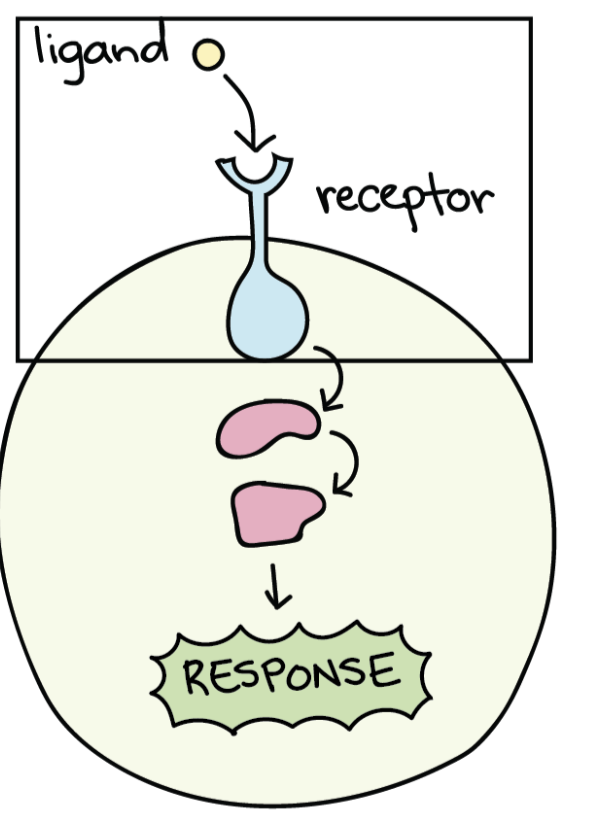
ligand
a signaling molecule that is bound to a receiving molecule (the receptor)
* come in closely matched pairs, with a receptor recognizing just one (or a few) specific ligands, and a ligand binding to just one (or a few) target receptors
binding of a lignad to a receptor changes its shape or activity, allowing it to transmit a signal or directly produce a change inside of the cell
endogenous vs exogenous ligands
endogenous ligands of a receptor are chemicals normally found in the body which bind to the receptor
exogenous ligands of a receptor are compounds not found in the body that, when introduced into the body, can affect the receptor in 1 of 2 ways:
agonist - binds to the recpetor and activate it in mushc the same way as its normal endogenous ligands
antagonist - binds to the receptor and prevent it from being activated by its normal ligand
many drugs that affect our nervous systems are exogenous ligands for NTs
antagonist drugs work in 2 ways
competitive binding - teh drug attaches to the receptor and blocks the normal ligand binding site
noncompetitive binding - the durg attaches to the receptor and prevents it frombeing activated, no blocking the normal ligand bindign site
endogenous ligand can still bind to recpetor, but no activation
what are modulatory NTs?
what are catecholamines?
hormones and NTs produced by the brain, nerve tissues, and adrenal glands
pimary ones — dopamine, norepinephrine/noradrenaline, and epinephrine / adrenaline
synthesized from the animo acid (tyrosine)
tyrosine is catalyzed into DOPA by tyrosine hydroxylase, and DOPA is then converted into dopamine by L-amino acid decarboxylase
NE is synthesized from dopamine by Dopamine β-hydroxylase
E is synthesized from NE by phenylethanolamine-N-methyltransferase
adenylate / adenylyl cyclase
ACs are a family of enzymatic proteins. Most of them attach to the intracellular side of the cell membrane
AC enzymes catalyze the conversion of (ATP) adenosine triphosphate into cyclic AMP (cAMP- adenosine monophosphate) and pyrophosphate (PP)
cyclic - ring shape of cAMP
a major action of cAMP is to regulate cAMP-dependent kinases such as protein kinase A (PKA)
catalyzed
something that has been accelerated or sparked by a catalyst. In science, it refers to a chemical reaction sped up by a substance that remains unchanged.
catalyst = anything that speeds up or triggers a major change without being affected or consumed in the process.
In chemistry, a catalyst is a substance that speeds up a chemical reaction (or lowers the energy needed to start it) without being permanently changed or used up itself.
what are the different types of somatosensation (body sensation)?
disciminative touch
proprioception — positon of joints and limbs
nociception — pain and temperature (tissue damage, heat, cold)
dermatomes
the area of skin innervated by a single spinal nerve
innervated - a body part, tissue, organ being supplied with nerves (distribution of nerve fibers that carry signals between that area and the nervous system, allowing for motor control (movement) and sensory feedback)
spinal cord segments (5 groups of somatosensory dermatoses/ areas)
cervical (C1-C8) - arms and back of head
thoracic (T1-T12) - back and stomach
lumbar (L1-L5) - lower back and front of legs
sacral (S1-S5) - buttocks and back of legs
coccygeal (1) - pelvis and groin
unilateral / bilateral
unilateral - one side
/ bilateral - two sides
ipsilateral / contralateral
ipsi = same side of the body
contra- = opposite side of the body
dorsal
back, anterior, upper
ventral
front, belly, lower side of body / anterior
rostral
towards the beak or nose
*
upper cranial, superior,
caudal
towards the tail, the hind part of the bdoy , further away from the head
transduction
the conversion of energy from one form into another
all sensory systems transduce some form of energy into APs (nerve signals)
vision: photoreceptors convert light energy to nerve singals
hearing: mechanoreceptors convert sound waves (energy) into nerve signals
touch: mechanoreceptors sense pressure, thermoreceptors sense temp, chemoreceptors sense tissue damage
smell and taste: chemoreceptors sense odorants and tastants
other; homeostatic sensors for blood pressure, hydration, tiredness, etc.
Generator (receptor) potentials
the opening of the mechanically gated Na channels (stretch sensitive) causes excitatory potentials (similar to EPSPs) and thereby transduces mechanical energy into electrical energy
a weak touch stimulus causes a weak (subthreshold) generator P,
a strong touch stimulus —> can trigger APs in the receptor neuron (DRG cell)
what is the preferred stimuli of discriminative touch?
different kinds of receptors in the skin sense different kinds of discrinative touch stimuli by transducing different kinds of energy
corpus callosum
a major comissure that connects the left and right cerebral hemispheres in the brain
anterior white commissure
in the spinal cord = where the dorsal horn interneurons that are exicted by A S and C fibers cross the midline
commissures
axon bundles that carry info from one side of the brian or spinal cord to the opposite side
decussations
midline crossings
center-surround receptive fields
each neuron in the somatosensory cortex responds to a patch of skin with an excitatory center and inhibitory surround
Acetylcholine (Ach)
synthesized by combineing choline (one of the b vitamins) with acetate (acetyl-CoA); this is done by choline acetyltransferase
Ach is released by neurons with cell bodies in the basal forebrain (nucleus basalis + medial septum) that send axons all over the brain
basal forebrain
a cluster of structures located near the bottom of the front of the brain
It is primarily responsible for regulating arousal, attention, and memory through the widespread release of acetylcholine. Its dysfunction is closely linked to cognitive decline and Alzheimer's disease

Ach Receptors
Nicotinic receptors and muscarinic receptors
Nicotinic receptors
ligand-gated cation channels iwth a 5-subunit strcurure similar to GABA-A channels
in teh PNS, Ach is the excitatory NT released by motor neurons to activate muscle fibers at the neuromsucular junction (exclusively via nictonic receptors)
nicotinic agonists = Nicotine
Nicotinic antagonists =
curare (paralytic arrow poison)
various muscle relaxants
Muscarinic Ach Receptors
there are 5 major subtypes of MR, distributed throughout the CNS and PNS
Muscarinic agonists = muscarine - a nerve toxin found in some speciries of poisonous mushrooms
muscarinic antagonists =
atropine = surgical anesthesia to treat bradycardia (slow heart rate)
scopalamine = low doses to treat motion sickness, higher doeses causes amnesia
Endocannabinoids
neuromodulatory lipids
a major exogenous ligand for cannabinoid receptors