Lec 14 - Plant Diversity
 Call Kai
 Learn
Learn Practice Test
 Spaced Repetition
 Match
Match Flashcards
 Knowt Play
1/22

There's no tags or description
Looks like no tags are added yet.
Name | Mastery | Learn | Test | Matching | Spaced | Call with Kai |
|---|
No analytics yet
Send a link to your students to track their progress
23 Terms
What were the four strategies that plants had to evolve to transition from water to land?
1) Avoid drying out
2) Disperse reproductive cells in air
3) Structural support
4) filter sunlight
What type of growth is described by growth until death?
Indeterminate growth
What is the process of drying out called for plants?
Desiccation
What are the four major adaptations that are found in terrestrial plants?
1) Alternation of generations - a life cycle in which an organism has both haploid and diploid stages
2) Sporangia - structures that produce spores
3) Gametangia - structures that produce gametes
4) Apical meristem - region of plant tissue, roots and shoots, that are constantly growing
What are the haploid and diploid multicellular form called?
Gametophyte - haploid generation
Sporophyte - diploid generation
How do seeded plants compare to seedless plants when it comes to sporophyte and gametophyte generations?
Sporophyte generation is most obvious in seeded plants
Gametophyte generation is most obvious in seedless plants
What are the two types of vascular tissue that are found in plants and what are their purposes?
Xylem - transports water throughout the plant
Phloem - transports minerals and food throughout the plant
What is the waxy, waterproof coating on plant leaves and stems in land plants called? What are the pores that open and closes called?
Cuticle
Stomata
What are the 2 major groups land plants are classified into?
Nonvascular plants / Bryophytes
Vascular plants.
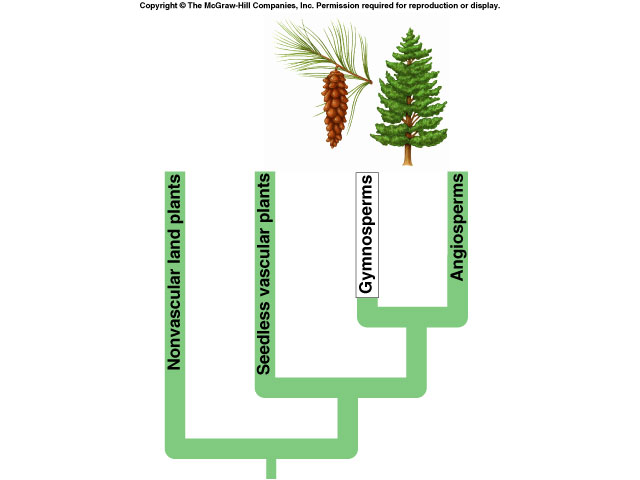
What are the two groups land, vascular plants are classified into?
Seedless plants
Seed plants
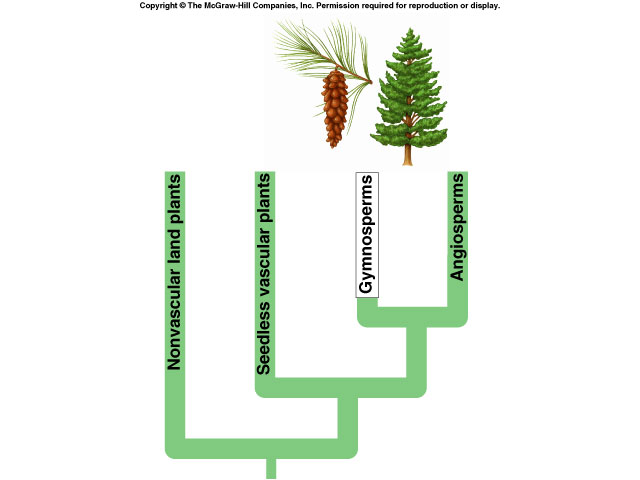
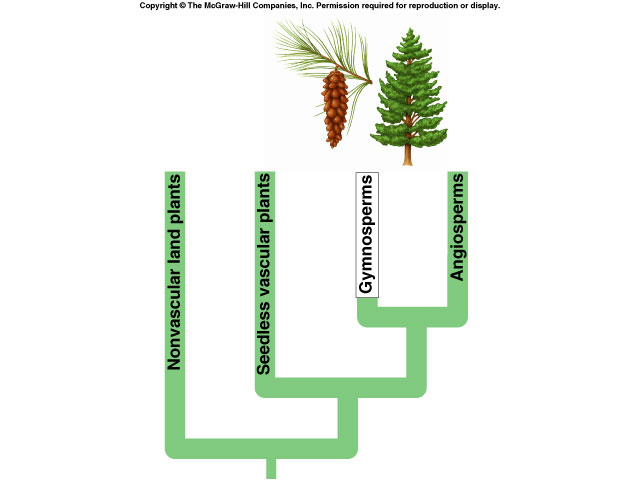
What are the two groups land, vascular, seed plants are classified into?
Gymnosperms - cone-bearing plants
Angiosperms - flowering plants
What is an example of a bryophyte? What are its two major characteristics? What is their most obvious generation?
1) Mosses
2) No vascular tissue and no true roots or leaves
3) Gametophyte
What are key features and important features of a vascular plant?
1) Dominant group of land plants
2) Xylem helps transport and store water. Phloem transports sugar, protein, and solutes through the plant.
3) Roots transfer water and minerals, and help anchor the plant.
What are key features of seedless vascular plants?
1) Most obvious generation is sporophyte (2n)
2) Water is needed for fertilization
3) Ferns are the most advance seedless vascular plants.
What is the purpose of pollen and what does it carry?
Allows land plants to breed with other land plants. It carries male gametes.
What are some key features of a gymnosperm?
cone-bearing plants
separate male and female gametes
pollination by wind
male cone grow on lower branches, female cones grow on upper branches
What are the four groups of gymnosperms and their features?
1) Conifers:
needle-like leaves
high altitudes and cold climates
evergreen
2) Cycads:
mild climates
3) Ginkgophytes
4) Gnetophytes
What are the 1) two main structures of angiosperms and 2) their features?
1)
Flowers - disperse pollen through cooperative relationships with insects
Fruits - agent of dispersal of seeds and protection for the developing embryo
2)
Flowers:
Sepals: green structures surrounding the floral bud before it opens
Petals: inside the sepals: colorful to attract pollinators
Carpal: female sex organ
Stamens: male sex organs
Fruits:
Fertilized and fully ripe ovary
Seed: actual embro
What is a perfect flower?
A plant that carries both stamens and carpels on the same flower.
What generation is dominant for both gymnosperms and angiosperms? What do both have in common of their pollen grain?
Sporophyte
Each pollen grain have 2 cells: one cells turns into two sperms, one turns into the pollen tube
What is the embryo sac?
The female gametophyte inside the ovule that consists of 8 nuclei in 7 cells.
What happens when a pollen grain lands on the carpel?
A pollen tube is formed and grows down until it reaches the ovule
The two sperm cells are deposited into the embryo sac
One sperm fuses with the egg to form the zygote
Endosperm: the other sperm that unites with 2 of the other 8 cells, a food reserve for the plant
Double fertilization: the event of both sperm functioning in angiosperms
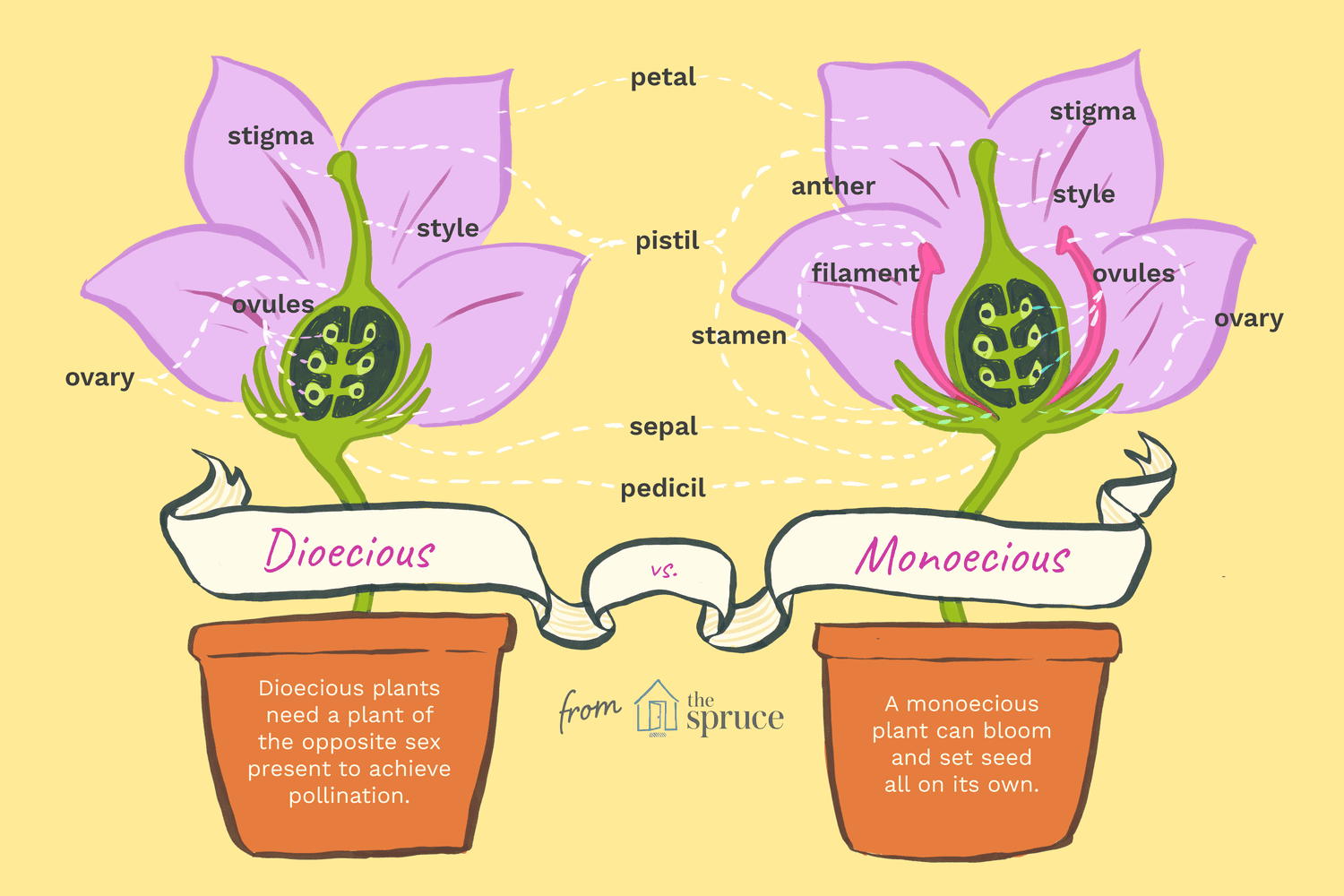
What is the difference between dioecious and monoecious?
Dioecious - plants with male and female flowers on different plants, (either male or female)
Monoecious - plants that are perfect flowers OR have both male and female flowers (both male and female)